Types Of Purlins decisions become easier when the inquiry starts with the interface or operating problem the project actually needs to solve. This guide focuses on frp roof and wall member options. It is written for buyers, designers and site teams considering FRP products. Distinguish roof purlins, wall girts and main rafters before comparing section types. The objective is to turn that concern into clear drawings, evidence requests and acceptance decisions before the order becomes difficult to change.
For this types of purlins review, use the following four questions as a starting brief. They identify the information that deserves attention before price, color or a catalog photograph becomes the main selection criterion. The guidance describes a decision process; it does not assign a load rating, service life, certification or guaranteed cost saving to an unspecified product.
Types Of Purlins: four decisions to resolve first
1. Distinguish roof purlins, wall girts and main rafters before comparing section types.
2. Gravity loads and wind suction act in different directions and can change the critical connection.
3. Do not transfer steel Z-section overlap details directly to a composite profile.
4. Compare bracing needs and panel fastener support alongside the member's own bending properties.
Define the component and its duty for types of purlins
The starting point for types of purlins is the duty and the geometry the project will actually use. A purlin works within a roof or wall system, so its member size cannot be selected independently of the cladding, supports and restraint. Show the span, continuity assumptions, fastening lines and any bridging on the same design package. Roof gravity load and wind suction may put different parts of the section and connection into the critical condition. Include the temporary erection stage because a completed roof panel arrangement may provide restraints that are absent while the first members are being installed.
Match the material to the exposure
For types of purlins, the material recommendation should be attached to defined conditions. Industrial roofs can expose their underside to humid air, aggressive vapor or repeated condensation even when the exterior sees only weather. Record these environments separately. The material recommendation should address the resin system and surface condition, while the connection review should include bolts, brackets and any metal roof-sheet components. A corrosion-resistant member does not automatically protect adjacent hardware. Where fire performance is relevant, request evidence for the specified formulation and assembly; a general flame-retardant description does not establish structural behavior during a fire.
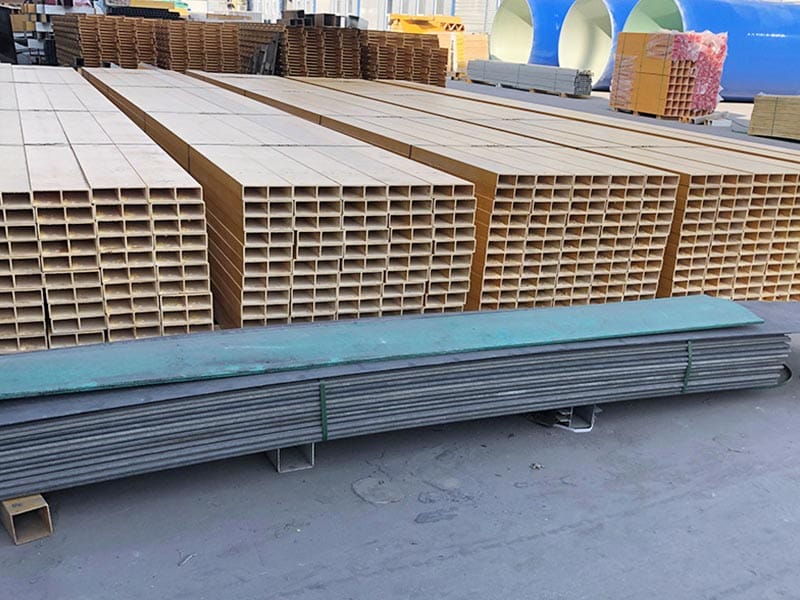
Review connections and system interfaces
The types of purlins decision also depends on the adjoining components and their interfaces. Roof sheets transfer force through their fasteners into a limited area of the purlin. The available bearing surface, hole position and local wall construction therefore matter alongside global bending. Ask for the detail that applies to the proposed sheet profile and fastener. Avoid assuming that a self-drilling fastener or overlap arrangement used on steel is suitable for FRP. Draw the direction of uplift and verify how the load reaches the primary frame, including the brackets and their anchors.
Compare the same function and boundary
Define what both alternatives must accomplish before listing their advantages. For types of purlins, hold the intended duty, support arrangement, environmental exposure and required interfaces constant. Identify where an alternative requires additional components or a different installation method. This avoids comparing one bare product with another complete assembly. A useful comparison may conclude that each option suits a different boundary condition; it does not need to declare a universal winner. Keep broad material claims separate from the evidence for the actual proposed construction.
Test the difficult interface in both options
Choose a representative transition, joint or constrained location and work through how each option would be installed and maintained. Use the same drawing information and access assumptions. Record extra fittings, preparation or support changes needed by either solution. For types of purlins, a small trial assembly can expose practical differences that are invisible in a side-by-side catalog table. Make the purpose of the trial clear and avoid treating it as a substitute for design verification where structural, electrical or process performance needs separate evidence.
Compare the available decision paths for types of purlins
| Decision path | Useful when | Evidence needed before release |
|---|---|---|
| Use a standard configuration | The proposed geometry and service remain within the documented offering. | A matching drawing, material specification and supported application boundary. |
| Adapt the configuration | An interface or operating requirement differs from the standard offering. | An approved change detail and assessment of the affected material, connection or system behavior. |
| Hold the decision for more information | A critical input is absent or two documents contradict each other. | A named owner for the missing input and a resolved revision before manufacture or installation. |
Apply this comparison to types of purlins using the actual project brief. In particular, gravity loads and wind suction act in different directions and can change the critical connection. A standard product can be the right choice when its evidence covers the requirement; a custom option needs a clear reason and a controlled change, rather than an assumption that customization automatically improves performance.
A practical types of purlins review before purchase
A wall girt and a roof purlin can share a profile while experiencing different load direction and restraint. Compare the full assembly sketches, including cladding fasteners. A detail taken from an overlapping steel Z-purlin system should not be transferred without review. The comparison needs to explain how the FRP alternative connects and remains stable in its intended position.
The same meeting should close the remaining question: compare bracing needs and panel fastener support alongside the member's own bending properties. Put the accepted answer on the controlled drawing or purchase specification and identify the reviewer. If the answer changes the arrangement, update the quotation and inspection scope together. This keeps the types of purlins decision connected to the product that will actually be supplied and gives the installer a record to follow when a site condition differs from the original plan.
Prepare the types of purlins inquiry
For a types of purlins inquiry, send the current drawing, quantities, dimensions, intended service, location constraints and required documents to Xinpeng. Identify frp roof and wall member options as the main review objective, and flag any unresolved input. Ask for a written response describing the offered construction, interfaces and exclusions. This is more useful than requesting a generic best price because it allows the proposed solution and the commercial scope to be reviewed together.
Explore the FRP Purlins product page and the FRP Purlins range, or send your project details to Xinpeng. Product photographs illustrate appearance and typical forms; dimensions, ratings and supplied features must follow the confirmed quotation and drawing.
Further reading: Composites UK: structural design resources. Use this independent resource within its stated scope and jurisdiction. It is background guidance, not evidence that a particular Xinpeng product has a certification or approval. The project team should confirm the applicable requirements for the installation and review the actual product documentation.
Frequently asked questions
What should I clarify first about types of purlins?
Distinguish roof purlins, wall girts and main rafters before comparing section types. For types of purlins, put the corresponding input on a drawing or written service schedule so the supplier can respond to a defined requirement. Identify who confirms that input and keep it separate from any provisional assumption in the quote.
Can I compare types of purlins using only the catalog description?
A catalog description is a starting point for a types of purlins inquiry, but it does not define every interface or operating condition. Gravity loads and wind suction act in different directions and can change the critical connection. Request the offered construction and supporting evidence in writing, and check that the quotation includes the components needed to achieve the intended project function.
Which detail is easily missed in a types of purlins order?
Do not transfer steel Z-section overlap details directly to a composite profile. Keep this issue visible in the types of purlins review rather than leaving it as an informal site decision. Where the answer changes geometry, load transfer or operating conditions, obtain an approved revision before manufacture or installation.
What belongs in the types of purlins acceptance record?
The types of purlins record should identify the accepted drawing, material or component requirements, inspection evidence and remaining limitations. Compare bracing needs and panel fastener support alongside the member’s own bending properties. Keep deviations and their approval with the final documents so replacement orders and future modifications use the same agreed basis.
How can Xinpeng assess my types of purlins inquiry?
Send the product duty, quantities, drawings, exposure conditions and the specific questions discussed in this guide. For types of purlins, identify any required testing or certification without assuming it is already included. Xinpeng can then be asked to confirm the proposed supply scope, available documentation, customization options and quotation basis for your project.