Underground Cable Marker Posts decisions become easier when the inquiry starts with the interface or operating problem the project actually needs to solve. This guide focuses on cable route identification at crossings. It is written for buyers, designers and site teams considering FRP products. Record route turns, crossings and asset identifiers in a controlled location schedule. The objective is to turn that concern into clear drawings, evidence requests and acceptance decisions before the order becomes difficult to change.
For this underground cable marker posts review, use the following four questions as a starting brief. They identify the information that deserves attention before price, color or a catalog photograph becomes the main selection criterion. The guidance describes a decision process; it does not assign a load rating, service life, certification or guaranteed cost saving to an unspecified product.
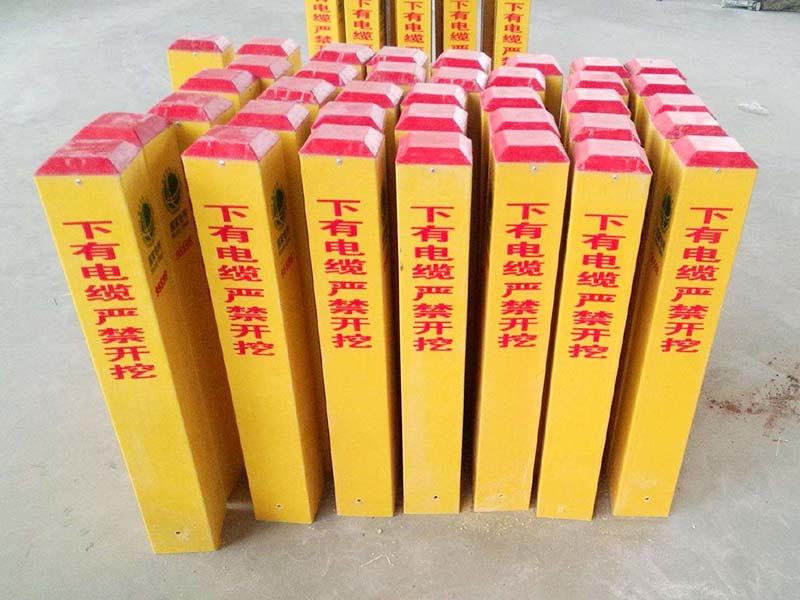
Underground Cable Marker Posts: four decisions to resolve first
1. Record route turns, crossings and asset identifiers in a controlled location schedule.
2. A surface marker indicates an asset corridor and does not prove precise underground position or depth.
3. Coordinate the legend with the utility owner's terminology before printing.
4. Use the approved locating procedure before any ground disturbance near the route.
Define the component and its duty for underground cable marker posts
The starting point for underground cable marker posts is the duty and the geometry the project will actually use. A utility marker is an identification aid linked to an asset record. It should communicate the intended route or hazard clearly, but its position alone cannot establish the exact location or depth of a buried service. Build the order from an approved location and legend schedule. Include the direction from which the message will normally be read and any obstruction that could hide it. Keep road-traffic markers and industrial utility posts within their respective project requirements instead of assuming the same product serves both roles.
Review connections and system interfaces
The underground cable marker posts decision also depends on the adjoining components and their interfaces. The installation detail should suit the post section, ground condition and exposure. Confirm how the post is secured, how much of the marked face remains visible and how replacement can be carried out. Do not assume that a deeper installation is always better if it buries essential information or conflicts with the approved asset corridor. Any excavation must follow the site's utility-locating and permit process. The marker should help future teams recognize the asset, not create a false assurance that digging is safe beside it.

Plan inspection and future changes
The underground cable marker posts record should remain useful after the original purchasing team has moved on. Route inspections should record missing, leaning, damaged, faded and obscured markers separately. The corrective action depends on the problem: trimming vegetation differs from replacing an unreadable panel, while a moved post may require an asset-location review. Confirm contact details and warnings remain current before reproducing an old sign. Keep replacements traceable to the original location and reason for change. Avoid promising a fixed universal inspection interval; set it using the asset owner's procedures, local exposure and the consequences of losing identification.
Coordinate the operating and maintenance envelopes
Plot the space needed during normal use, installation and component removal. These envelopes can differ substantially. A compact underground cable marker posts arrangement may fit the first layout while blocking the lifting path or tools needed later. Ask operators and installers to review the drawing before procurement. Show doors, access openings, adjacent equipment and temporary work zones where they affect the design. Keep the necessary clearances visible as controlled requirements rather than relying on a verbal agreement that another trade will leave enough room.
Check changes of direction and interrupted support
Corners, openings, level changes and transitions often deserve more attention than repeated straight sections. Review how the intended function continues through each of these locations. Do not extend a detail beyond the conditions for which it was assessed simply because the catalog components look compatible. On a underground cable marker posts drawing, mark locations needing special supports, fittings, restraint or access protection. This creates a focused review list and helps the estimator include the parts and labor that are easily missed when quantities are measured only along the main route.
Compare the available decision paths for underground cable marker posts
| Decision path | Useful when | Evidence needed before release |
|---|---|---|
| Use a standard configuration | The proposed geometry and service remain within the documented offering. | A matching drawing, material specification and supported application boundary. |
| Adapt the configuration | An interface or operating requirement differs from the standard offering. | An approved change detail and assessment of the affected material, connection or system behavior. |
| Hold the decision for more information | A critical input is absent or two documents contradict each other. | A named owner for the missing input and a resolved revision before manufacture or installation. |
Apply this comparison to underground cable marker posts using the actual project brief. In particular, a surface marker indicates an asset corridor and does not prove precise underground position or depth. A standard product can be the right choice when its evidence covers the requirement; a custom option needs a clear reason and a controlled change, rather than an assumption that customization automatically improves performance.
A practical underground cable marker posts review before purchase
At a cable crossing, show both the surface marker and the asset record it references. Confirm the wording communicates identification without claiming precise buried depth. The marker schedule should remain consistent with the utility owner's locating procedure. Future excavation teams need both reliable records and the required on-site verification.
The same meeting should close the remaining question: use the approved locating procedure before any ground disturbance near the route. Put the accepted answer on the controlled drawing or purchase specification and identify the reviewer. If the answer changes the arrangement, update the quotation and inspection scope together. This keeps the underground cable marker posts decision connected to the product that will actually be supplied and gives the installer a record to follow when a site condition differs from the original plan.
Prepare the underground cable marker posts inquiry
For a underground cable marker posts inquiry, send the current drawing, quantities, dimensions, intended service, location constraints and required documents to Xinpeng. Identify cable route identification at crossings as the main review objective, and flag any unresolved input. Ask for a written response describing the offered construction, interfaces and exclusions. This is more useful than requesting a generic best price because it allows the proposed solution and the commercial scope to be reviewed together.
Explore the FRP Marker Post product page and the FRP Marker Posts range, or send your project details to Xinpeng. Product photographs illustrate appearance and typical forms; dimensions, ratings and supplied features must follow the confirmed quotation and drawing.
Further reading: OSHA: accident prevention signs and tags. Use this independent resource within its stated scope and jurisdiction. It is background guidance, not evidence that a particular Xinpeng product has a certification or approval. The project team should confirm the applicable requirements for the installation and review the actual product documentation.
Frequently asked questions
What should I clarify first about underground cable marker posts?
Record route turns, crossings and asset identifiers in a controlled location schedule. For underground cable marker posts, put the corresponding input on a drawing or written service schedule so the supplier can respond to a defined requirement. Identify who confirms that input and keep it separate from any provisional assumption in the quote.
Can I compare underground cable marker posts using only the catalog description?
A catalog description is a starting point for a underground cable marker posts inquiry, but it does not define every interface or operating condition. A surface marker indicates an asset corridor and does not prove precise underground position or depth. Request the offered construction and supporting evidence in writing, and check that the quotation includes the components needed to achieve the intended project function.
Which detail is easily missed in a underground cable marker posts order?
Coordinate the legend with the utility owner’s terminology before printing. Keep this issue visible in the underground cable marker posts review rather than leaving it as an informal site decision. Where the answer changes geometry, load transfer or operating conditions, obtain an approved revision before manufacture or installation.
What belongs in the underground cable marker posts acceptance record?
The underground cable marker posts record should identify the accepted drawing, material or component requirements, inspection evidence and remaining limitations. Use the approved locating procedure before any ground disturbance near the route. Keep deviations and their approval with the final documents so replacement orders and future modifications use the same agreed basis.
How can Xinpeng assess my underground cable marker posts inquiry?
Send the product duty, quantities, drawings, exposure conditions and the specific questions discussed in this guide. For underground cable marker posts, identify any required testing or certification without assuming it is already included. Xinpeng can then be asked to confirm the proposed supply scope, available documentation, customization options and quotation basis for your project.