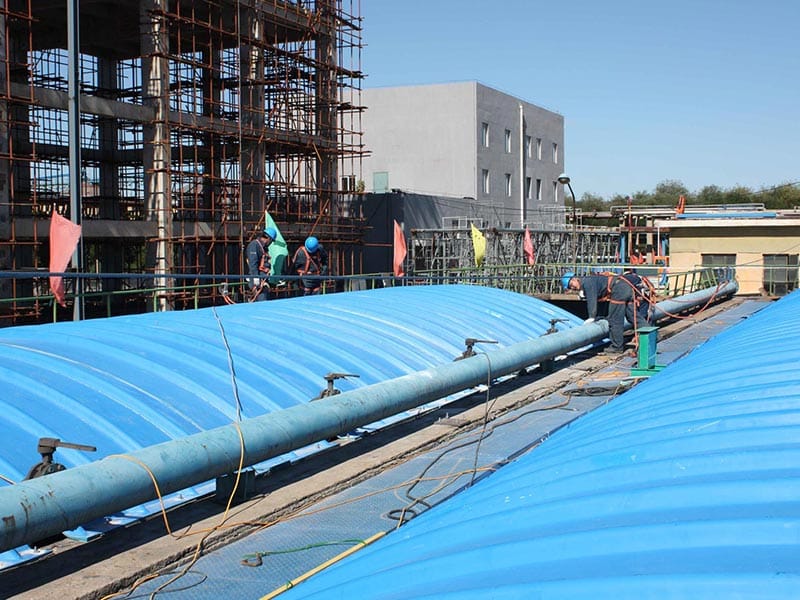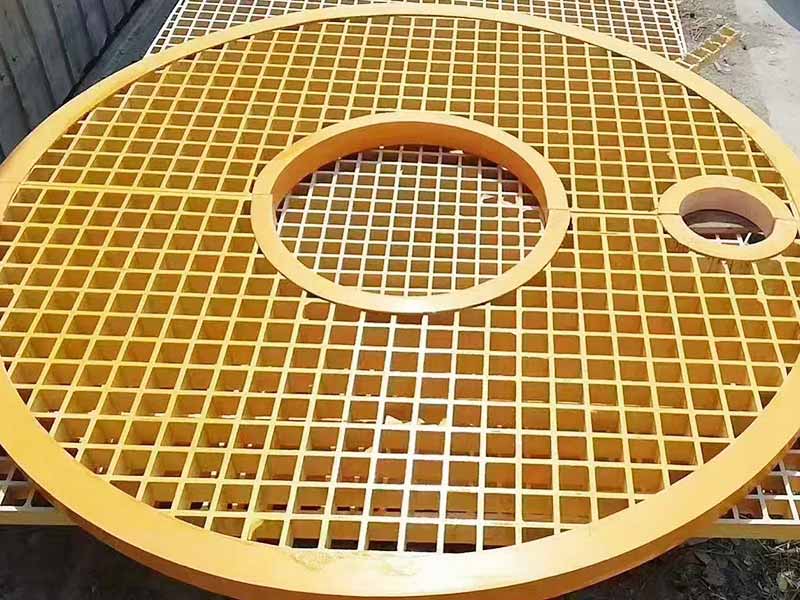
Wastewater treatment plants, sewage tanks, sedimentation tanks, sludge tanks, and industrial wastewater systems all face one difficult problem: gases do not stay where operators want them to stay. Odor can spread beyond the treatment area, corrosive vapor can attack nearby equipment, and open tanks can create safety risks for workers and visitors.
That is why many municipal engineering contractors, wastewater plant operators, and environmental project buyers use an FRP tank cover as part of a wider odor control and safety strategy. Compared with traditional steel or concrete covers, FRP tank covers are lightweight, corrosion resistant, customizable, and suitable for harsh sewage environments where hydrogen sulfide, ammonia, humidity, and outdoor exposure may be present.
This guide explains how to choose the right FRP tank cover for wastewater and sewage treatment projects, how different cover types work, what technical details buyers should prepare, and how to avoid common specification mistakes before sending an inquiry.
Table of Contents
Why Wastewater Tank Covers Matter More Than Many Buyers Realize
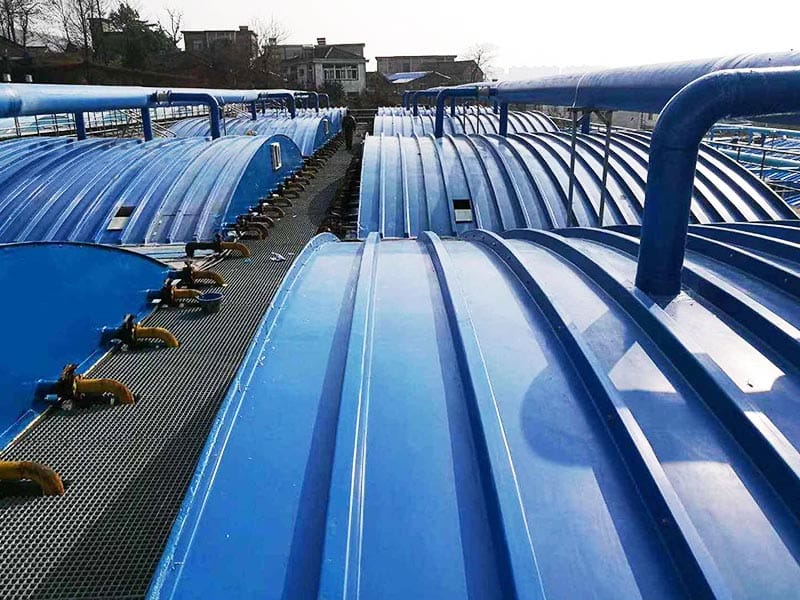
A tank cover is not only a simple lid. In wastewater projects, it can affect odor control, gas collection, corrosion protection, worker safety, rainwater control, and long-term maintenance.
Open tanks can allow odor to diffuse into the surrounding area. In sewage and wastewater environments, gases may include hydrogen sulfide, ammonia, methane, and other compounds. You can learn more about common odor and safety concerns from this overview of sewer gas. When these gases are not captured or controlled, the plant may face complaints, equipment corrosion, unsafe working conditions, and higher maintenance pressure.
A properly designed FRP tank cover helps create a controlled enclosure above the tank. It can reduce odor diffusion, guide waste gas toward treatment equipment, prevent foreign objects from entering the tank, and improve safety around open water or sludge areas.
For project buyers, the main question is not simply “Do we need a cover?” The better question is: “What kind of cover system matches this tank, this gas environment, and this maintenance requirement?”
What Is an FRP Tank Cover?
An FRP tank cover is a fiberglass reinforced plastic cover system designed to enclose, seal, protect, or partially cover tanks, channels, pools, trenches, and wastewater treatment units. FRP is a composite material made with fiberglass reinforcement and resin. In tank cover applications, this material is valued for corrosion resistance, lightweight structure, weather resistance, and flexible fabrication.
Xinpeng supplies multiple FRP cover products for sewage and wastewater projects, including FRP sewage tank covers, FRP arched covers, FRP flat cover plates, FRP grating covers, and FRP sewage tank covers.
Common functions of an FRP tank cover include:
Capturing odor and waste gas
Reducing gas diffusion around the plant
Protecting tanks and equipment from corrosion
Improving operational safety around open tanks
Preventing debris from entering tanks or channels
Supporting inspection openings and access hatches
Reducing rainwater entry into treatment units
Creating a cleaner and more organized plant environment
For wastewater treatment projects, the cover should be considered together with the tank shape, gas collection pipeline, access needs, support structure, sealing design, and maintenance plan.
Where FRP Tank Covers Are Commonly Used
FRP tank covers are suitable for many wastewater, sanitation, municipal, and industrial environments. Typical application areas include:
Municipal wastewater treatment plants
Industrial wastewater treatment systems
Sewage collection and lifting stations
Sludge thickening tanks
Sedimentation tanks
Equalization tanks
Aeration tank side areas
Deodorization collection systems
Chemical dosing areas
Drainage channels and trenches
Septic tank systems
Waste gas collection projects
These sites often combine moisture, corrosive gas, chemical exposure, outdoor weather, and frequent inspection needs. For that reason, a tank cover must be easy to handle, resistant to corrosion, and practical for long-term use.
In some projects, the cover is part of a larger wastewater system that may also include FRP integrated pumping stations, FRP grating, FRP pipes, and other corrosion-resistant FRP products.
FRP Tank Cover and Odor Control: What It Can and Cannot Do
A common misunderstanding is that a tank cover alone “solves” odor. In real wastewater projects, odor control is usually a system. The FRP tank cover captures or limits the gas release area, but the collected gas may still need to be ventilated, treated, or connected to a deodorization unit.
A practical odor control system may include:
FRP tank cover
Sealing strips or connection flanges
Gas collection hood or duct connection
Ventilation pipeline
Fan or negative pressure system
Chemical scrubber, biofilter, or other treatment equipment
Inspection hatches
Drainage and condensate management
Hydrogen sulfide is one of the most discussed gases in wastewater odor and corrosion control. It has a strong odor and can contribute to corrosion in sewer and wastewater environments. You can read more about this compound from hydrogen sulfide and related wastewater corrosion discussions from the U.S. Environmental Protection Agency.
For buyers, this means the FRP tank cover should not be selected separately from the odor control design. The cover shape, sealing method, gas outlet position, and maintenance openings should all support the final waste gas collection plan.
Main Types of FRP Tank Covers
Different tank cover types serve different project needs. Choosing the correct structure can improve sealing performance, reduce installation difficulty, and make future maintenance easier.
| Cover Type | Best Used For | Main Advantages | Key Design Concern |
|---|---|---|---|
| FRP arched cover | Large-span sewage tanks and odor control projects | Better load distribution, good sealing, suitable for larger coverage | Span, support distance, wind load, access hatch position |
| FRP flat cover plate | Tanks, trenches, channels, equipment protection | Simple structure, modular design, easier fabrication | Support spacing, sealing strip, drainage design |
| FRP grating cover | Walkway covers, trench covers, drainage areas | Load-bearing, anti-slip, protective surface | Whether full sealing is required |
| FRP gas collection hood | Waste gas capture points and deodorization systems | Helps guide gas to treatment pipeline | Airflow, connection flange, hood geometry |
| Custom FRP tank cover | Non-standard tanks and special plant layouts | Designed to match site drawings | Accurate dimensions and installation details |
The best solution depends on tank size, gas concentration, access needs, load requirements, sealing expectations, and whether the cover must connect to an odor treatment system.
FRP Arched Cover vs FRP Flat Cover Plate
Many buyers compare FRP arched covers and FRP flat cover plates during project planning. Both can be used in wastewater and sewage applications, but they are suitable for different structures.
An FRP arched cover is often used for larger tanks where the curved structure helps distribute loads and cover wider spans. It is commonly selected for sewage pools, reaction tanks, sludge tanks, and odor collection areas where sealing and gas collection are important.
An FRP flat cover plate is often used for smaller tanks, trenches, equipment protection, drainage channels, and modular cover systems. It can be easier to install in sections and may be suitable where the span is shorter or where frequent opening is required.
A simple selection logic is:
Choose an FRP arched cover when the tank is large, the span is wide, and gas collection is a major goal.
Choose an FRP flat cover plate when the structure is smaller, modular access is important, or the cover is mainly used for protection and sealing.
Choose an FRP grating cover when walking access, drainage, and anti-slip function are more important than full sealing.
Choose a gas collection hood when the project needs targeted gas capture from a specific process area.
FRP Tank Cover vs Steel and Concrete Covers
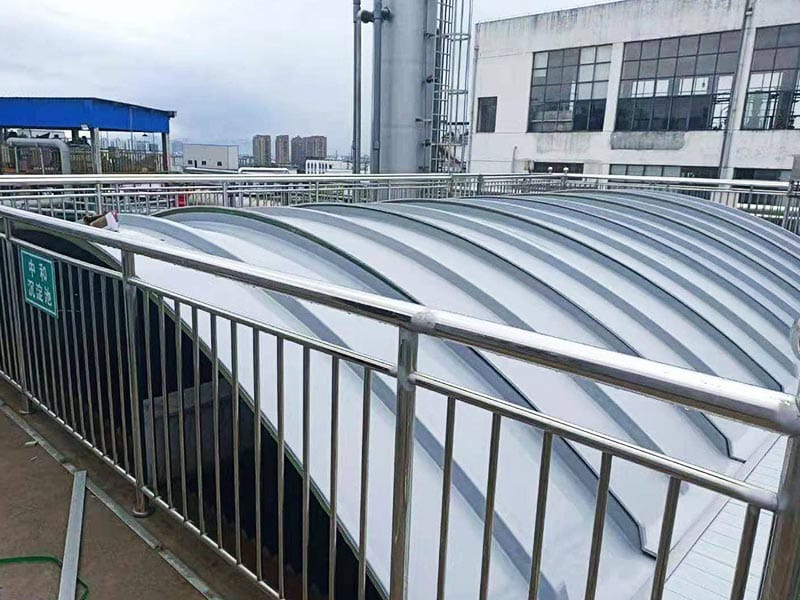
Steel and concrete covers are still used in many projects, but they may not always be ideal for corrosive wastewater environments. FRP covers are often selected when corrosion resistance, lightweight installation, and custom fabrication are priorities.
| Factor | FRP Tank Cover | Steel Cover | Concrete Cover |
| Corrosion resistance | Strong in many sewage and chemical environments | Requires coating or protection | Can suffer corrosion and cracking in aggressive environments |
| Weight | Lightweight and easier to install | Heavy | Very heavy |
| Customization | Easy to fabricate into curved, flat, or modular shapes | Custom fabrication possible but heavier | More difficult to modify after construction |
| Maintenance | Low when properly selected | Coating inspection often required | Cracks and joints may need repair |
| Gas sealing | Can be designed with sealing strips and gas outlets | Possible, but corrosion at joints may be a concern | Joint sealing can be difficult |
| Installation | Easier for retrofit and elevated areas | Requires lifting equipment for larger panels | Requires heavy equipment and structural planning |
| Best use scenario | Wastewater, odor control, corrosion-resistant covers | High mechanical strength where corrosion is controlled | Permanent civil structures with heavy-duty requirements |
FRP is not automatically the best material for every project. The correct choice depends on tank size, load, fire requirements, local regulations, support conditions, and maintenance access. However, in wastewater and chemical environments, FRP often provides a better balance of corrosion resistance, weight, and customization.
Key Factors to Confirm Before Buying an FRP Tank Cover
A reliable FRP tank cover begins with clear project information. Buyers should avoid sending only the tank length and width. For a better quotation and design recommendation, prepare the following details.
Tank Size and Shape
Provide the tank length, width, diameter, height, opening size, wall thickness, and whether the tank is rectangular, circular, irregular, open-channel, or divided into multiple sections. For non-standard tanks, drawings or site photos are very helpful.
Cover Function
Clarify whether the cover is mainly for odor control, safety protection, rainwater prevention, debris protection, gas collection, anti-corrosion protection, or walking access. Different functions require different structures.
Gas and Chemical Environment
Wastewater environments can vary greatly. Domestic sewage, industrial wastewater, chemical wastewater, and sludge treatment areas may create different gas and corrosion conditions. Share the main gas or chemical exposure if known, especially hydrogen sulfide, ammonia, acid vapor, alkaline vapor, or chemical splashing.
Load Requirement
Confirm whether the cover only needs to support its own weight and wind load, or whether workers need to walk on it during inspection. If maintenance staff will stand on the cover, this must be clearly stated.
Access and Maintenance Needs
Covers often need inspection hatches, removable panels, lifting handles, manholes, sampling ports, pipe openings, and reserved equipment access points. These details should be planned before production.
Sealing Requirement
If odor control is the main purpose, the sealing design is critical. Buyers should confirm whether sealing strips, bolted connections, flange connections, or gas outlet interfaces are needed.
Outdoor Conditions
For outdoor installation, consider UV exposure, wind load, rainwater drainage, thermal movement, and weather resistance. The cover should not only fit the tank but also perform reliably under local site conditions.
How to Design an FRP Tank Cover for Better Odor Collection
A good FRP tank cover should support airflow control. This is especially important when the tank cover is connected to a deodorization system.
The design should consider:
Where gas is generated most strongly
Where the gas outlet should be located
Whether the system uses negative pressure
How air enters and exits the covered space
Whether condensate may form inside the cover
How inspection staff will access equipment
Whether covers need removable sections
How to prevent dead zones where odor accumulates
If the project uses a gas collection hood, the hood shape and outlet position should help guide waste gas efficiently. The cover should also reduce unnecessary air leakage, because excessive leakage can reduce collection efficiency and increase fan load.
For wastewater treatment plants, it is useful to understand the broader process context from wastewater treatment, especially when deciding which tanks and process areas need covers.
Safety Details Buyers Should Not Ignore
Tank covers are often installed around open water, sludge, moving equipment, chemicals, and confined spaces. Safety should be part of the design from the beginning.
Important safety details include:
Anti-slip walking surfaces when staff need access
Inspection hatches with safe opening methods
Enough structural support for maintenance loads
Proper fixing to prevent wind uplift
Warning signs around restricted access areas
Safe lifting points for removable covers
Smooth edges after cutting or fabrication
Correct ventilation planning before entry into covered areas
Covered wastewater tanks may create enclosed or limited-access spaces. For maintenance planning, buyers and operators should also understand workplace confined space risks. OSHA provides general information on confined spaces, which is relevant when workers may need to inspect or enter covered tanks, pits, or process areas.
An FRP tank cover improves safety by reducing open-tank hazards, but it does not remove the need for safe operating procedures.
Common Mistakes When Purchasing FRP Tank Covers
The first mistake is choosing only by cover price or panel size. A tank cover system must match the span, load, sealing requirement, access plan, and gas collection design.
The second mistake is ignoring odor treatment connection details. If the cover needs to connect to a pipeline or deodorization system, gas outlet size and location must be planned before production.
The third mistake is using a flat cover where an arched cover is more suitable. Large tanks may need better structural distribution and drainage design, especially outdoors.
The fourth mistake is forgetting maintenance access. If operators need to inspect mixers, pumps, valves, sensors, or sludge equipment, the cover should include suitable hatches or removable panels.
The fifth mistake is underestimating wind load. Lightweight FRP is easier to install, but outdoor covers must still be properly fixed.
The sixth mistake is not explaining the wastewater environment. Resin selection and cover structure should reflect whether the site involves domestic sewage, chemical wastewater, high humidity, acid vapor, ammonia, or hydrogen sulfide exposure.
Buyer Checklist Before Sending an Inquiry
Before requesting a quotation for an FRP tank cover, prepare this information:
| Inquiry Detail | Why It Matters |
| Tank type and dimensions | Helps determine cover shape and panel layout |
| Tank drawing or site photo | Reduces design and installation errors |
| Main purpose | Odor control, safety, sealing, protection, or access |
| Chemical or gas exposure | Helps select resin system and sealing design |
| Indoor or outdoor use | Affects UV resistance, wind load, and drainage |
| Required cover type | Arched, flat, grating, hood, or custom design |
| Load requirement | Determines structure and support spacing |
| Access openings | Needed for inspection, sampling, and equipment maintenance |
| Gas outlet requirement | Important for odor collection systems |
| Support structure | Affects installation method and stability |
| Quantity and delivery plan | Helps production and project scheduling |
A clear inquiry helps the supplier recommend a practical cover system instead of only quoting a generic panel.
How Xinpeng Supports FRP Tank Cover Projects
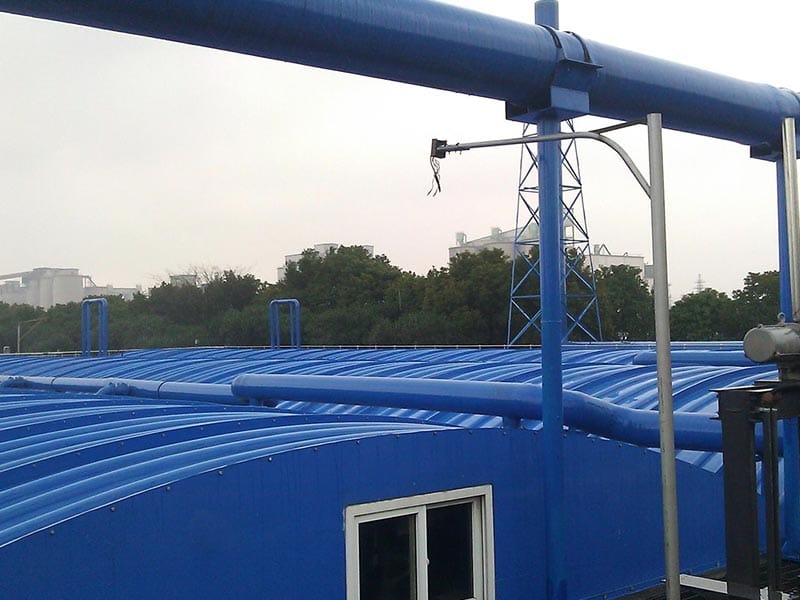
Xinpeng supplies FRP products for industrial corrosion resistance, wastewater treatment, environmental projects, municipal infrastructure, and structural engineering applications. For wastewater cover projects, buyers can review the FRP Sewage Tank Covers category, including arched covers, flat cover plates, grating covers, gas collection solutions, and customized sewage tank covers.
For projects that require a broader wastewater system, Xinpeng can also support related FRP products such as FRP integrated pumping stations, FRP septic tanks, FRP grating, and FRP pultruded profiles.
If your project involves sewage tanks, odor control covers, municipal wastewater plants, industrial wastewater systems, or custom tank sealing requirements, you can contact Xinpeng with drawings, tank dimensions, gas conditions, and installation requirements.
FAQ
What is an FRP tank cover used for?
An FRP tank cover is used to cover sewage tanks, wastewater tanks, channels, trenches, sludge tanks, and industrial process tanks. It helps with odor control, safety protection, corrosion resistance, gas collection, and debris prevention.
Is an FRP tank cover suitable for wastewater treatment plants?
Yes. FRP tank covers are widely used in wastewater treatment plants because they resist corrosion, are lightweight, and can be customized for sealing, gas collection, inspection openings, and outdoor installation.
What is the difference between an FRP arched cover and an FRP flat cover plate?
An FRP arched cover is better for larger spans and odor collection projects, while an FRP flat cover plate is suitable for smaller tanks, trenches, modular protection, and equipment covering.
Can an FRP tank cover control odor completely?
An FRP tank cover can help capture and reduce odor diffusion, but full odor control usually requires a complete system, including sealing, gas collection pipelines, ventilation, and deodorization equipment.
What information should I provide before ordering an FRP tank cover?
You should provide tank dimensions, drawings or photos, installation environment, odor control requirements, gas exposure, load needs, access openings, cover type, outdoor conditions, and connection requirements.
Conclusion
An FRP tank cover is a practical solution for wastewater treatment plants, sewage tanks, sludge systems, municipal projects, and industrial wastewater facilities that need odor control, corrosion resistance, safety protection, and long-term durability.
The best cover choice depends on tank size, cover function, gas environment, load requirement, sealing design, access needs, and installation conditions. Buyers should avoid selecting only by panel size and should instead treat the cover as part of the full wastewater odor control and maintenance system.
For FRP sewage tank covers, arched covers, flat cover plates, grating covers, and customized wastewater tank cover systems, Xinpeng can help review your project requirements and recommend a suitable solution. Visit the FRP sewage tank covers page or contact Xinpeng to discuss your project.