A fiberglass round tube can look simple on a drawing, yet small specification gaps can create large differences in stiffness, connection behavior, dimensional fit, and long-term suitability. Diameter alone is not enough. A buyer also needs to define wall thickness, reinforcement direction, resin system, surface condition, tolerances, support spacing, loads, joints, and the environment in which the profile will operate.
This guide explains how to select fiberglass round tube for industrial frames, handrails, equipment supports, utility structures, lightweight assemblies, and corrosion-resistant fabrication. It is intended for engineers, fabricators, contractors, maintenance teams, and procurement professionals who need a practical way to compare quotations without relying on a generic product label.
The objective is not to choose the largest available profile. It is to match the fiberglass round tube to the real load path, service environment, connection method, fabrication process, and documentation requirements of the project.
What you will learn:
- How outside diameter and wall thickness affect the section
- Why fiber direction matters when comparing mechanical data
- How resin, UV exposure, temperature, and chemicals influence material selection
- Which connection details should be resolved before ordering
- What drawings, tests, tolerances, and quantities belong in an RFQ
Table of Contents
What Is Fiberglass Round Tube?
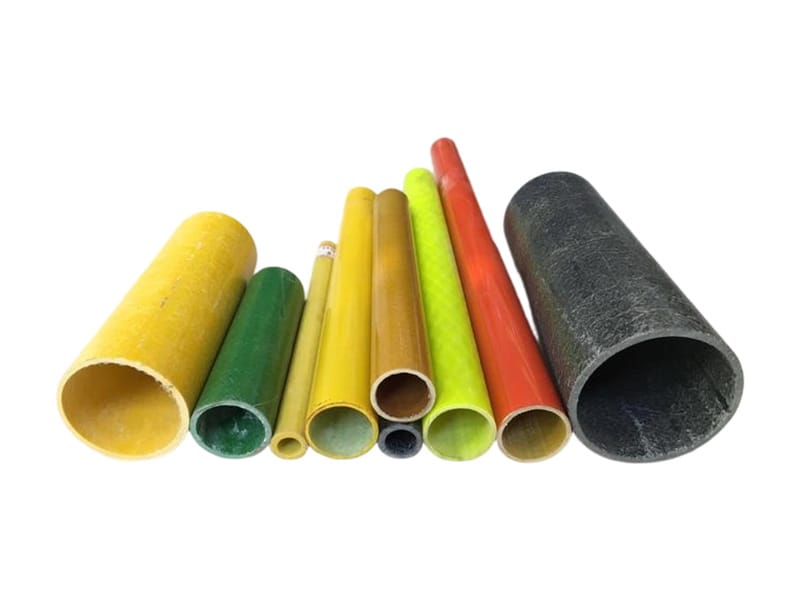
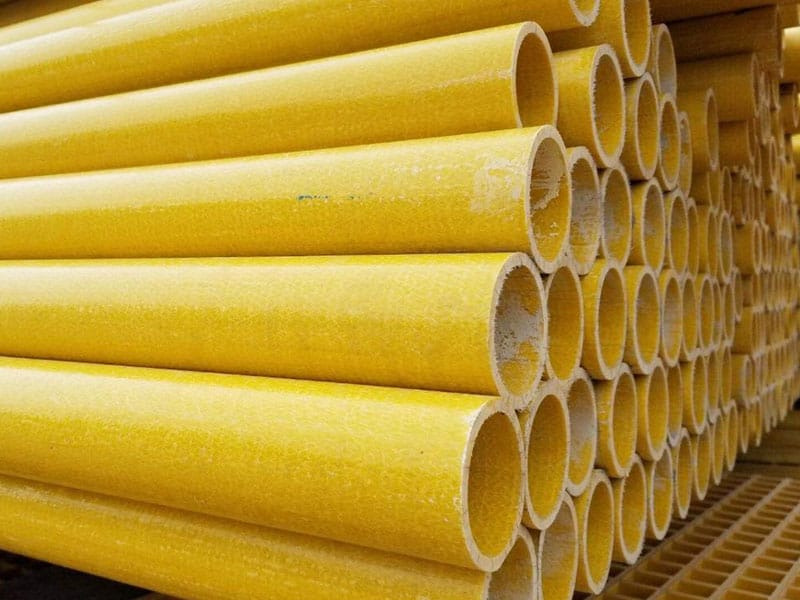
Fiberglass round tube is a hollow composite profile made from glass reinforcement and a polymer resin matrix. Structural profiles are commonly produced by pultrusion, a continuous process that aligns much of the reinforcement along the length of the part and pulls the material through a heated die.
The circular shape of fiberglass round tube has no preferred face, which can simplify certain frames, rails, spacers, sleeves, handles, and components that experience loads from more than one direction. However, the behavior of a fiberglass round tube still depends on the laminate architecture. Longitudinal strength and stiffness may differ significantly from transverse, bearing, and through-wall behavior.
The FRP round tube product page shows the profile family available from Xinpeng. Buyers should treat dimensions and general product descriptions as a starting point, then confirm the exact property data and manufacturing details for the required section.
Define the Load Before Choosing a Size
Start with the function of the fiberglass round tube. Is it a beam, post, brace, handrail, guard component, equipment stand, antenna support, nonstructural spacer, or protective sleeve? The same outside diameter may be suitable for one use and inappropriate for another.
For fiberglass round tube selection, document axial tension and compression, bending direction, shear, torsion, concentrated forces, distributed loads, impact, vibration, and any load introduced through bolts or clamps. Include support spacing and connection restraint. A short member between close supports behaves differently from a long member with the same section.
Deflection often controls serviceability before ultimate strength becomes the limiting check. Excessive movement can affect alignment, seals, attached equipment, appearance, and user confidence. A qualified designer should evaluate the fiberglass round tube using project-specific loads and applicable design requirements. The ASCE/SEI 74-23 standard page identifies a load-and-resistance-factor design standard for pultruded glass-FRP structural shapes and connections.
Select Outside Diameter and Wall Thickness Together
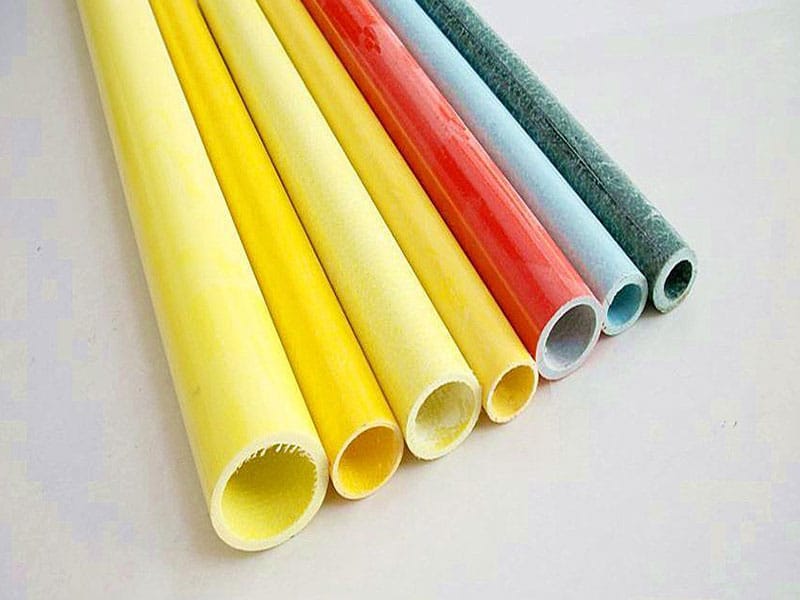
For fiberglass round tube, outside diameter changes the geometry of the section, while wall thickness changes the amount of material and the inside diameter. Both influence bending stiffness, local bearing, crushing resistance, connection layout, weight, and fit with inserts or clamps.
Do not select a fiberglass round tube solely by replacing a metal tube with the same nominal dimensions. The elastic modulus, material directionality, connection behavior, and environmental response are different. Direct substitution requires calculation and a review of the entire assembly.
Provide the required outside diameter, inside diameter or minimum wall thickness, cut length, and interface dimensions. If the fiberglass round tube must slide into a sleeve, fit over a shaft, pass through a bearing surface, or mate with molded fittings, state the required clearance and tolerance rather than assuming a nominal size will fit.
Understand Fiber Direction and Mechanical Data
Pultruded profiles typically contain continuous reinforcement oriented mainly in the production direction, with mats or other reinforcement supporting transverse properties and surface integrity. This makes fiberglass round tube an anisotropic material: properties vary with direction.
When reviewing a data sheet, check whether each tensile, compressive, flexural, shear, or bearing value is longitudinal or transverse. Also confirm the test method, conditioning, specimen type, temperature, and whether the value is typical, minimum, characteristic, or design-level. A single “strength” number is not enough for engineering comparison.
ASTM D638 addresses tensile testing of plastics and explains that results depend on specimen preparation, test speed, and environment. ASTM D790 covers flexural testing of reinforced and unreinforced plastics and notes important limitations for highly orthotropic laminates. Use the method required by the material specification or project, and avoid comparing numbers generated under different procedures as if they were equivalent.
Match the Resin System to the Environment
For fiberglass round tube, resin selection affects chemical compatibility, temperature capability, moisture response, flame performance, weathering, and fabrication. Give the supplier a list of chemicals, concentrations, operating and upset temperatures, contact duration, cleaning agents, and whether exposure is liquid, splash, vapor, soil, or outdoor weather.
For an outdoor fiberglass round tube, specify the expected UV exposure and required surface protection. For electrical areas, do not convert the general nonmetallic character of the composite into an unsupported electrical-safety claim. The assembled system may include conductive fasteners, moisture, contamination, or attached equipment, and the applicable electrical design still governs.
Fire and smoke requirements must also be stated explicitly. A resin description or color is not proof of a particular rating. Request documentation for the exact fiberglass round tube construction and the test method required by the project. The broader Why FRP page summarizes the material advantages that may support an environment-led comparison.
Plan Connections Before Finalizing the Profile
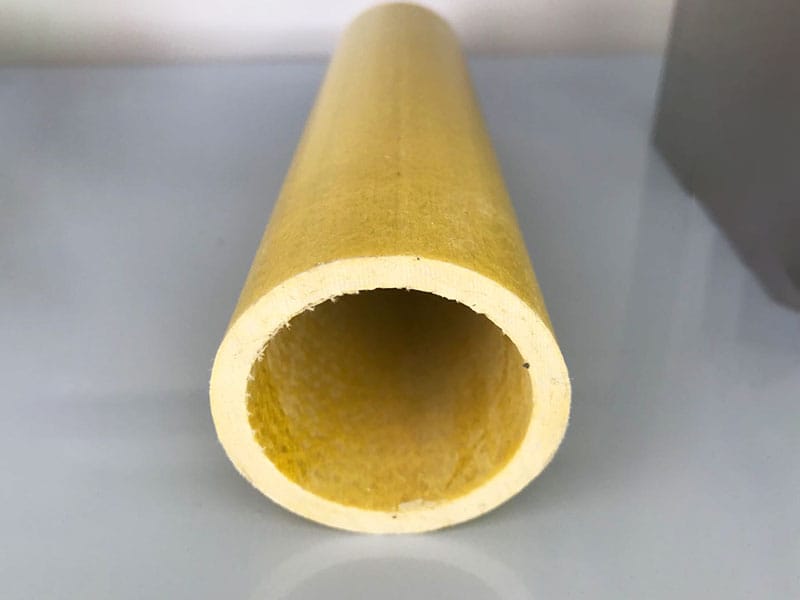
Fiberglass round tube connection design is often more important than the nominal member capacity. Bolts, pins, clamps, bonded sleeves, inserts, and saddles introduce local bearing, shear, splitting, peel, and crushing stresses that may not align with the strongest fiber direction.
For bolted fiberglass round tube, define hole diameter, edge distance, bolt spacing, washer or saddle geometry, tightening procedure, and the need for internal sleeves or crush-resistant inserts. Avoid uncontrolled field drilling, sharp notches, and excessive clamp pressure. Connection loads should be distributed over an appropriate area.
Bonded joints require a compatible adhesive, controlled surface preparation, correct bond-line geometry, curing conditions, and inspection. A hybrid joint may combine mechanical retention with bonding, but it still requires a documented design. Ask the supplier whether cut, drilled, bonded, or preassembled options are available for the selected fiberglass round tube.
Control Tolerances, Straightness, and Surface Quality
Nominal dimensions do not describe the complete manufacturing envelope. Diameter, wall thickness, straightness, twist, camber, cut length, end squareness, and surface condition can affect assembly. The ASTM D3917 specification addresses dimensional tolerances for standard pultruded rods, bars, and shapes, while custom products may use project-specific tolerances.
Identify which dimensions are functional. A decorative rail may tolerate more variation than a fiberglass round tube used with precision sleeves or repeated modular fittings. If several pieces must align across a long frame, cumulative tolerance and fixture design matter.
Define acceptable surface appearance, exposed-fiber limits, color, veil or coating, cut-end sealing, identification marks, and packaging. Cosmetic expectations should be separated from structural acceptance criteria so that inspections focus on relevant requirements.
Compare Round, Square, and Metal Tube
| Selection factor | Fiberglass round tube | Fiberglass square tube | Metal round tube |
|---|---|---|---|
| Section orientation | Same external geometry in every radial direction | Flat faces simplify some brackets and frames | Same circular geometry, with isotropic metal properties |
| Corrosion behavior | Does not rust; resin compatibility still requires review | Similar composite considerations | Depends on alloy, coating, exposure, and maintenance |
| Connections | Often needs saddles, sleeves, inserts, or shaped clamps | Flat plates and angles may be easier to seat | Welding and conventional fittings may be available where permitted |
| Material direction | Longitudinal and transverse properties differ | Longitudinal and transverse properties differ | Typical structural metals are generally treated as isotropic |
| Selection basis | Loads, diameter, wall, laminate, environment, and joints | Loads, face orientation, wall, environment, and joints | Loads, grade, wall, corrosion allowance or coating, and joints |
The square fiberglass tube guide provides a more detailed discussion of square sections. For broader profile selection, see the FRP pultruded profiles guide. Shape selection should follow the load path and connection layout, not appearance alone.
Fabrication and Installation Checklist
- Confirm the profile designation, diameter, wall thickness, length, resin, color, and surface finish against approved drawings.
- Support the fiberglass round tube during cutting to avoid chatter, splintering, and an uneven end.
- Use suitable tools, extraction, personal protective equipment, and site procedures for composite dust.
- Seal or finish cut ends when the project specification or environment requires it.
- Drill with controlled support and verify hole position, clearance, and edge distance before assembly.
- Apply specified bolt torque or clamp pressure without crushing the wall.
- Inspect the installed member for damage, unintended restraint, misalignment, and contact with incompatible components.
Do not treat a fiberglass round tube as a field-adjustable substitute for an incomplete design. Resolve hole patterns, inserts, fittings, support locations, and cut lengths before production where practical. Controlled fabrication improves repeatability and reduces avoidable site modifications.
Information to Include in a Supplier RFQ
A useful fiberglass round tube quotation request should include:
- Application, drawings, load cases, support spacing, and design responsibility
- Outside diameter, wall thickness or inside diameter, cut length, and quantity
- Resin system, reinforcement requirements, color, veil, coating, and UV exposure
- Chemicals, concentration, temperature, contact type, and cleaning conditions
- Functional tolerances, surface acceptance, cut-end treatment, and identification
- Hole patterns, inserts, bonding, fittings, hardware, and assembly scope
- Required material data, test methods, inspection records, certificates, and packaging
State whether the request is for stock lengths, cut pieces, machined parts, or complete assemblies. This helps the supplier quote the same fiberglass round tube scope that the project team intends to purchase.
Common Selection Mistakes
The first mistake is choosing by outside diameter alone. The second is using a longitudinal tensile value to represent bending, transverse, bearing, or connection performance. The third is copying metal tube dimensions without recalculating stiffness and joints.
Other errors include leaving chemical exposure undefined, assuming every resin has the same performance, ignoring dimensional fit, drilling too close to an end, overtightening clamps, and accepting a typical property as a guaranteed design value. A fiberglass round tube should be reviewed as part of the complete assembly.
Frequently Asked Questions
How do I choose the right fiberglass round tube diameter?
Define the loads, span, allowable deflection, connection layout, environmental reduction factors, and interface dimensions. A qualified designer can then compare sections using documented material properties and the applicable project standard.
Can fiberglass round tube replace steel tube directly?
Not by dimensions alone. Composite stiffness, directionality, joints, temperature response, and design criteria differ from steel. The replacement should be calculated and the complete assembly reviewed.
What is the most important mechanical property?
There is no single universal property. Bending stiffness may control one member, while compression, bearing, transverse strength, creep, or connection performance controls another. Use properties that match the actual load case and direction.
Can fiberglass round tube be drilled on site?
It can be machined with appropriate tools and controls, but the hole size, location, edge distance, dust control, sealing, and connection detail should follow approved procedures. Unplanned holes can reduce local capacity.
What documents should a buyer request?
Request the applicable product data, dimensions and tolerances, resin and reinforcement description, mechanical-property basis, required test reports, fabrication drawings, installation guidance, and inspection documents. Confirm that each document applies to the offered profile.
Conclusion
A successful fiberglass round tube specification connects geometry, loads, material direction, resin compatibility, tolerances, joints, fabrication, and documentation. None of these inputs should be replaced by a general claim that the profile is lightweight or corrosion resistant.
Start with the assembly and its real operating conditions. Then select the diameter and wall, confirm the property basis, resolve connections, and state the acceptance requirements in the RFQ.
Xinpeng supplies FRP products for industrial and infrastructure applications. To discuss fiberglass round tube, send your drawings, dimensions, loads, exposure details, quantity, fabrication scope, and documentation requirements through the contact page.