Industrial buyers rarely look for tubing just because they need a hollow profile. In most cases, they are solving a more practical problem: a frame is rusting too quickly, a metal guardrail is too heavy to install efficiently, a platform structure is exposed to moisture, or an electrical area needs a safer non-conductive material.
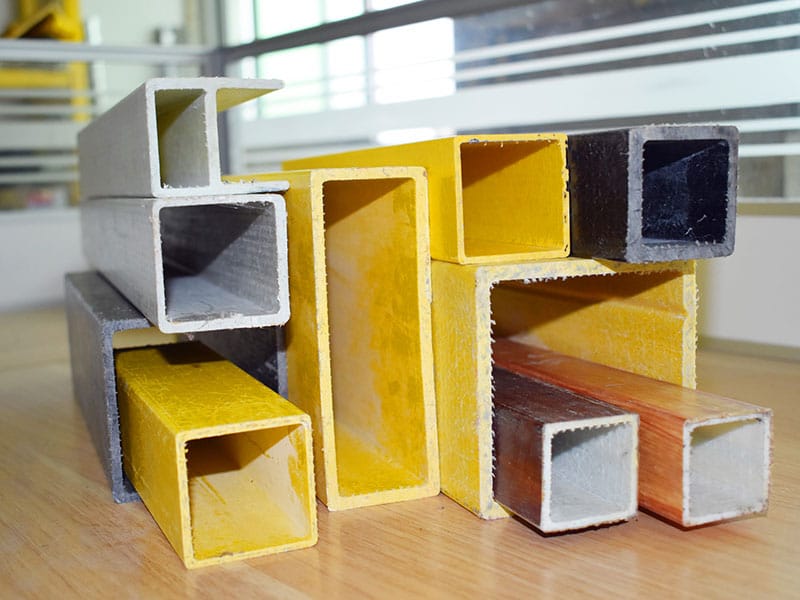
That is why square fiberglass tube has become a serious option for many industrial structures. It is lightweight, corrosion resistant, non-conductive, easy to process, and suitable for a wide range of outdoor and harsh working environments. Unlike traditional metal tubing, fiberglass square tube does not rely on painting, coating, or galvanizing to resist corrosion in many common industrial conditions.
For manufacturers, contractors, engineering buyers, and equipment builders, the real question is not simply “What is FRP square tube?” The better question is: How do you choose the right square fiberglass tube for the structure, environment, and installation method?
This guide explains how to evaluate material type, wall thickness, application environment, customization options, and supplier capability before placing an order.
Table of Contents
Why Square Fiberglass Tube Is Worth Considering
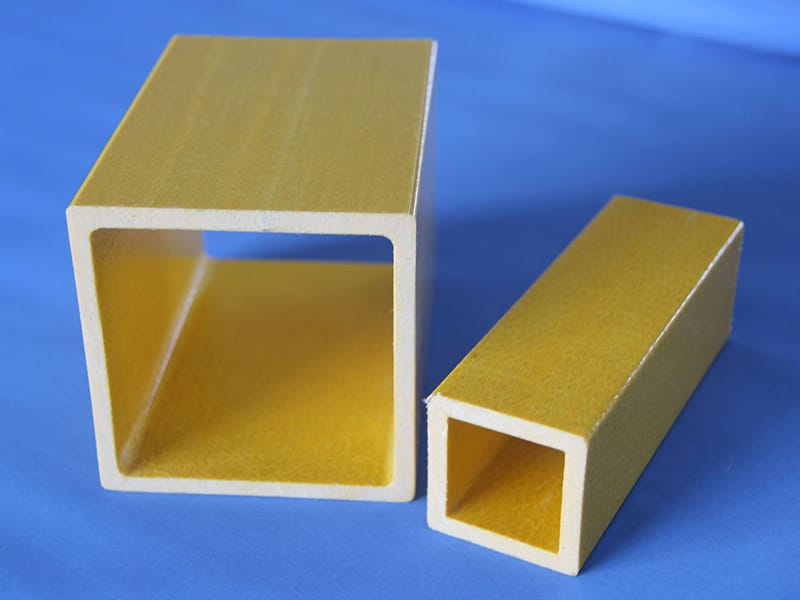
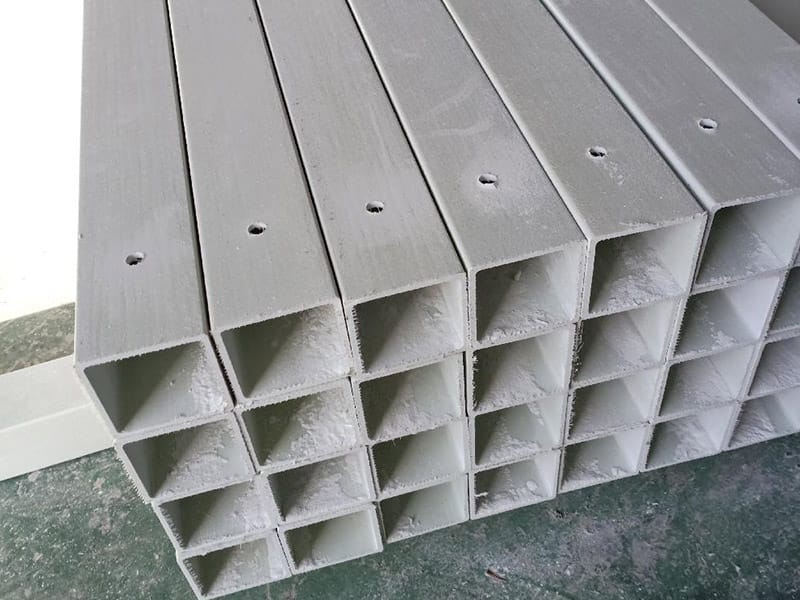
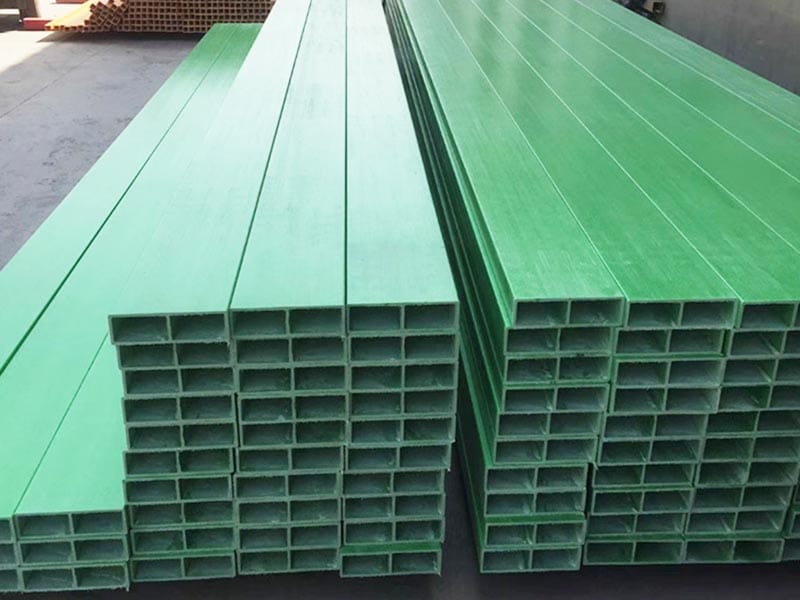
Square fiberglass tube is often used where strength, corrosion resistance, insulation, and long-term stability matter more than simple material familiarity. It is commonly produced by pultrusion, a continuous manufacturing process used to make composite profiles with constant cross-sections. This allows manufacturers to produce stable shapes such as square tubes, rectangular tubes, channels, rods, angles, and other structural profiles.
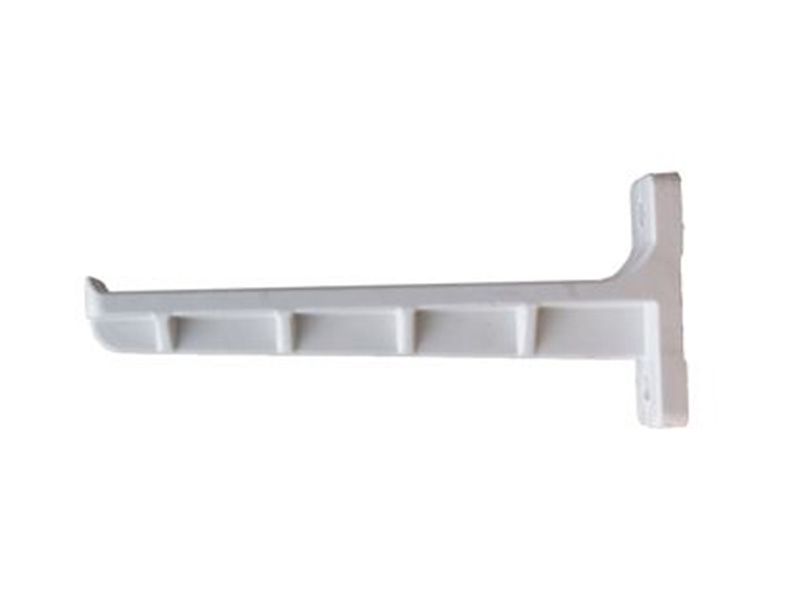
The square shape gives the tube flat sides, clean edges, and good connection surfaces. This makes it easier to use in frames, railings, equipment supports, platforms, ladders, and protective structures. Compared with round tubing, a square profile is often easier to bolt, clamp, align, and connect to flat panels or brackets.
For industrial use, the main value of fiberglass square tubing is not one single feature. It is the combination of several practical advantages:
| Buyer Concern | Why Square Fiberglass Tube Helps |
|---|---|
| Corrosion | Resists moisture and many harsh environments better than untreated metal |
| Weight | Easier to move, cut, and install than many metal alternatives |
| Electrical safety | Non-conductive properties can support safer use near electrical equipment |
| Maintenance | Does not require frequent repainting or anti-rust treatment in many applications |
| Customization | Can be produced in different sizes, wall thicknesses, colors, and resin systems |
| Installation | Can be cut, drilled, and processed for project-based assembly |
This is why square fiberglass tube is often considered for chemical plants, wastewater facilities, marine structures, outdoor platforms, industrial handrails, access ladders, and equipment frames.
What Is Square Fiberglass Tube?
Square fiberglass tube is a hollow structural profile made from fiberglass reinforcement and polymer resin. It is also commonly called fiberglass square tube, FRP square tube, GRP square tube, or fiberglass square tubing. These terms may vary by market, but they usually refer to similar composite square tube products.
The material is not a simple plastic tube. The fiberglass reinforcement provides strength, while the resin system binds the fibers together and protects the profile from environmental exposure. Depending on the application, different resin systems may be selected for general industrial use, improved corrosion resistance, flame retardancy, or outdoor durability.
A well-made pultruded fiberglass square tube should have:
- Consistent wall thickness
- Stable outer dimensions
- Good straightness
- Smooth surface finish
- Proper fiber distribution
- Clean cut ends
- Suitable resin selection for the working environment
For structural projects, these details matter. A tube that looks acceptable from the outside may still create installation or performance problems if the wall thickness, straightness, or resin system is not suitable for the project.
Where Square Fiberglass Tube Is Commonly Used
The demand for square fiberglass tube is closely connected to industrial environments where ordinary materials may fail too early or require frequent maintenance. FRP tubing is widely promoted in industrial use because of its corrosion resistance, lightweight structure, high strength, non-conductive properties, dimensional stability, and low maintenance requirements.
Industrial Handrails and Guardrails
Handrails and guardrails are among the most common uses for fiberglass square tube. In wet, coastal, chemical, or outdoor environments, metal handrails can corrode, lose coating, or require repeated maintenance. FRP square tube offers a more stable option in many of these conditions.
The flat sides of square fiberglass tube also make it practical for guardrail systems because it can be connected with brackets, posts, panels, or other structural components. For safety-related structures, buyers should always confirm the required load, spacing, connection method, and applicable project standards before ordering.
Fixed Ladders and Access Structures
Industrial sites often need fixed ladders, access frames, service platforms, and maintenance structures. These components may be exposed to rain, chemicals, dust, salt air, or wastewater environments. Fiberglass square tubing can help reduce corrosion concerns while keeping the structure easier to handle during installation.
For fixed access structures, the buyer should provide details such as ladder height, support spacing, expected load, installation location, and whether the structure will be installed indoors or outdoors.
Platforms, Walkways, and Support Frames
Square fiberglass tube is also used in light to medium structural frames, inspection platforms, walkways, equipment supports, and modular assemblies. In these projects, the material’s light weight can reduce handling difficulty during fabrication and installation.
However, structural framing should never be selected by size alone. Tube size, wall thickness, span, bracing, connection design, and load conditions all affect performance. A larger square fiberglass tube with poor connection design may perform worse than a properly selected profile with the correct support layout.
Wastewater, Chemical, and Marine Environments
Some of the strongest use cases for FRP square tube are found in corrosive environments. Wastewater treatment plants, chemical processing areas, marine facilities, and coastal structures often create conditions where traditional materials need additional protection.
In these applications, the buyer should not only ask for “fiberglass square tube.” It is better to confirm:
- Chemical exposure type
- Concentration range, if applicable
- Temperature conditions
- Indoor or outdoor exposure
- UV exposure
- Contact with water, vapor, or salt air
- Required resin system
- Fire retardant requirements
A manufacturer can only recommend a suitable custom square fiberglass tube when the working environment is clearly understood.
How to Choose the Right Size and Wall Thickness
Size is usually the first detail buyers mention, but it should not be the only factor. The right square fiberglass tube depends on how the tube will be used, how it will be fixed, and what type of load it needs to support.
Outer Dimension
The outer dimension affects the overall structure layout. For example, a larger square tube may be suitable for support posts, frames, or visible guardrail sections, while a smaller profile may be better for light frames, covers, barriers, or secondary supports.
When selecting the outer dimension, buyers should consider:
- Space available for installation
- Bracket or fitting compatibility
- Visual appearance
- Frame stiffness
- Connection points
- Required safety margin
Wall Thickness
Wall thickness has a direct impact on strength, durability, drilling performance, and connection reliability. A thin wall may be suitable for light-duty use, but industrial structures often require thicker walls to improve stability.
A thicker wall may be preferred when:
- The tube will support repeated loads
- The structure will be installed outdoors
- Bolts or fasteners will be used
- The tube is part of a guardrail, ladder, or platform
- The working environment is harsh
- Longer service life is expected
The best approach is to share drawings, load requirements, and installation conditions with the manufacturer before confirming wall thickness.
Length and Cutting Requirements
Standard-length square fiberglass tube may work for general stock needs, but many industrial buyers require cut-to-size profiles. Custom cutting can reduce on-site labor, improve installation efficiency, and lower the risk of incorrect field processing.
Before placing an order, confirm:
| Item to Confirm | Why It Matters |
|---|---|
| Required length | Reduces cutting work during installation |
| Length tolerance | Helps avoid assembly gaps or misalignment |
| Cutting angle | Important for frames and special structures |
| Drilling position | Supports faster assembly |
| End finish | Improves handling and appearance |
| Packaging method | Protects the tube during transportation |
| Labeling or bundling | Helps organize project-based installation |
For large or repeat projects, it is better to prepare a clear cutting list instead of ordering only full-length tubes.
How Resin Type Affects Performance
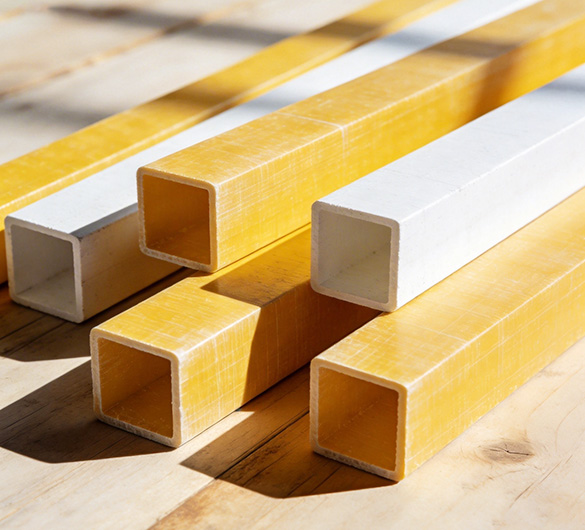
Not all fiberglass square tube products perform the same way. The resin system plays a major role in corrosion resistance, weather resistance, fire performance, and long-term stability.
A general-purpose resin system may be enough for common industrial frames or indoor structures. A more corrosion-resistant resin system may be needed for chemical plants, wastewater facilities, marine structures, or areas exposed to aggressive substances. Fire retardant resin may be required for projects with specific safety requirements.
This is where the manufacturer’s experience becomes important. A reliable fiberglass square tube manufacturer should not simply ask for size and quantity. They should also ask about the application environment, exposure conditions, and processing needs.
For example:
- A square fiberglass tube used in an indoor equipment frame may not need the same resin system as one used near chemical vapor.
- A guardrail exposed to outdoor sunlight may need better UV resistance.
- A tube used near electrical systems may need non-conductive performance as a key requirement.
- A project in a safety-sensitive area may require flame retardant material.
Choosing the wrong resin system can reduce service life even if the tube size looks correct.
Square Fiberglass Tube vs Steel Tube
Many buyers compare square fiberglass tube with steel tube before making a decision. Steel is familiar, strong, and widely used. But in corrosive, wet, outdoor, or electrically sensitive environments, fiberglass square tubing can be a practical alternative.
Where Fiberglass Square Tube Has Advantages
FRP square tube can be especially useful when the project requires:
- Corrosion resistance
- Lower maintenance
- Lightweight handling
- Electrical insulation
- Non-magnetic properties
- Easier cutting and drilling
- Outdoor durability
- Better performance in moisture-prone areas
In many industrial projects, the long-term issue is not whether steel is strong enough. The issue is whether the structure will remain usable without repeated coating, repainting, rust removal, or replacement.
Where Steel May Still Be Suitable
A balanced selection guide should also be honest. Steel may still be preferred in some high-load, high-temperature, or highly specialized structural conditions. If the project requires very high stiffness, specific welding requirements, or certain building code conditions, steel may remain the correct material.
This is why buyers should avoid choosing materials based only on general claims. The right decision depends on the working environment, structure design, load requirements, and long-term maintenance expectations.
Think Beyond the Initial Material Choice
For industrial buyers, the better comparison is often not “fiberglass or steel.” It is:
- How long will the structure remain usable?
- How much maintenance will it require?
- Will corrosion interrupt operation?
- Is the structure easy to install?
- Does the site require non-conductive material?
- Will the profile need custom processing before delivery?
- Can the supplier support repeat orders with stable quality?
When viewed this way, square fiberglass tube can become a stronger option for many industrial structures where corrosion and maintenance are the main concerns.
What Makes Pultruded Fiberglass Square Tube Different
Pultruded fiberglass square tube is produced through a continuous process. Fiberglass reinforcement is pulled through resin and then shaped through a heated die to form a consistent profile. This process is widely used for composite profiles because it supports long lengths and stable cross-sections.
From a buyer’s perspective, pultrusion matters because it affects product consistency. A good pultruded fiberglass square tube should offer repeatable dimensions, stable mechanical performance, and clean surface quality across production batches.
Fiber Reinforcement
The reinforcement structure affects strength and stiffness. The balance of continuous fibers, mats, and surface layers can influence how the tube performs under load, how it handles drilling, and how well the surface resists wear.
Resin Impregnation
Proper resin impregnation helps ensure the fiberglass reinforcement is fully bonded. Poor impregnation can lead to weak areas, surface defects, or inconsistent quality.
Die and Curing Control
The die controls the final shape, while curing conditions affect stability and surface finish. Temperature, pulling speed, and process control all matter. A stable production process helps ensure that the finished FRP square tube meets the required size and appearance.
Cutting and Finishing
After pultrusion, the tube may be cut to standard or custom lengths. The quality of cutting affects installation safety, appearance, and packaging. For project-based orders, accurate cutting can reduce site work and make assembly more efficient.
Custom Square Fiberglass Tube: When Standard Sizes Are Not Enough
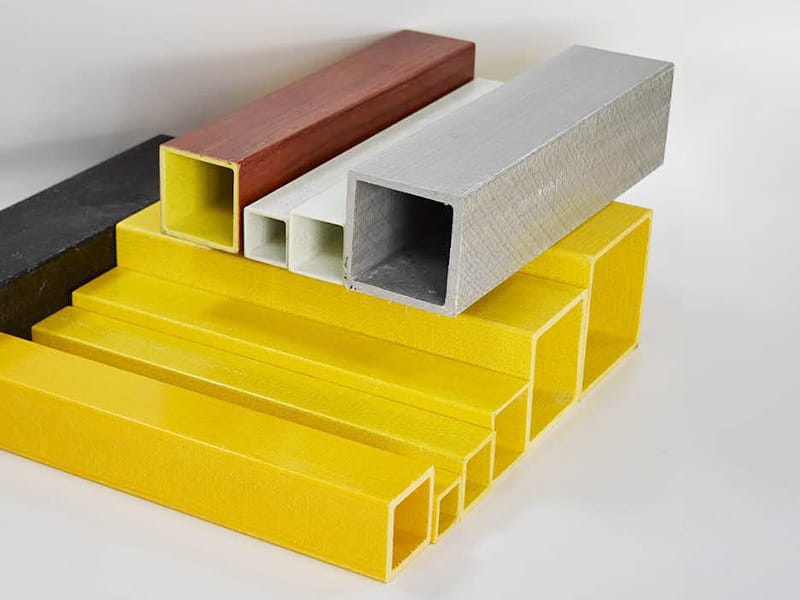
Standard square fiberglass tube is suitable for many common uses. But industrial buyers often need custom options because real projects rarely follow one fixed size.
Custom square fiberglass tube may be a better choice when the project requires:
- Special outer dimensions
- Non-standard wall thickness
- Specific resin system
- Custom color
- Cut-to-length supply
- Pre-drilled holes
- Special packaging
- Project-based bundling
- Drawing-based production
As a manufacturer, we usually recommend that buyers share drawings, application photos, operating environment details, and installation requirements before production. This helps avoid wrong specifications and makes the finished fiberglass square tubing easier to use on site.
Custom Size
Custom size is useful when the tube must match existing frames, equipment, brackets, panels, or modular systems. Even a small difference in outer dimension or wall thickness can affect assembly.
Custom Color
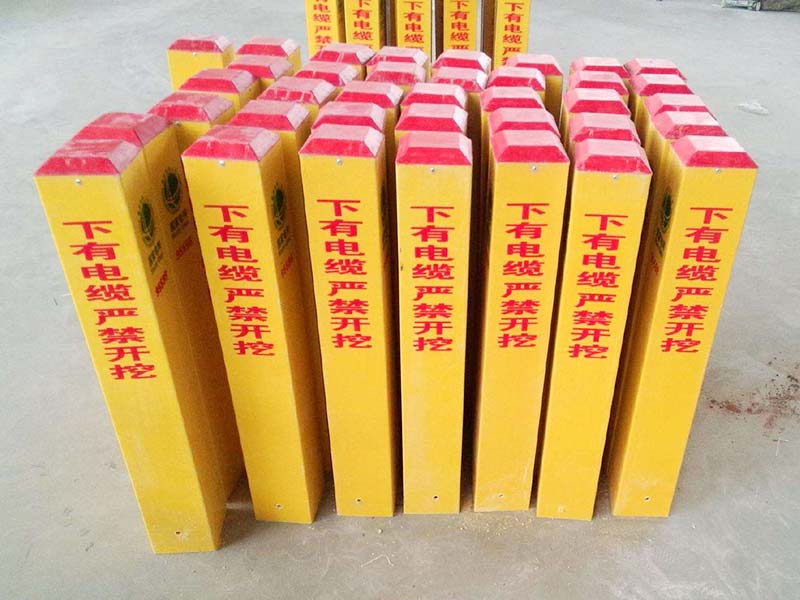
Color can support safety marking, project identification, or visual consistency. Yellow is often considered for safety structures, while gray, black, or other colors may be used for equipment frames or outdoor structures.
Custom Surface
Surface finish can affect appearance, weather resistance, and handling. For outdoor use, UV resistance and surface quality should be discussed before order confirmation.
Custom Processing
Cutting, drilling, chamfering, and packaging can help reduce work after delivery. For buyers managing multiple installation locations, processed tubes can simplify on-site assembly.
Selection Checklist for Industrial Buyers
A clear checklist can make square fiberglass tube purchasing much easier. Before asking for a quotation or production recommendation, buyers should prepare the following information.
| Selection Point | Details to Prepare |
|---|---|
| Application | Frame, handrail, ladder, platform, support, barrier, or equipment part |
| Environment | Indoor, outdoor, coastal, chemical, wastewater, electrical, or marine |
| Tube size | Outer dimension and wall thickness |
| Length | Standard length or cut-to-size requirement |
| Load condition | Light-duty, medium-duty, or structural support use |
| Connection method | Bolting, clamping, bonding, brackets, or custom fittings |
| Resin requirement | General purpose, corrosion resistant, UV resistant, or flame retardant |
| Color | Standard color or custom color |
| Processing | Cutting, drilling, slotting, labeling, or bundling |
| Quantity | Trial order, project order, or repeat supply plan |
This information helps the manufacturer recommend a more accurate FRP square tube solution instead of giving a generic product answer.
Common Mistakes When Buying Fiberglass Square Tube
Even experienced buyers can make mistakes when switching from metal tubing to fiberglass square tube. The most common problems usually come from incomplete project information, not from the material itself.
Choosing Only by Size
Two tubes with the same outer dimension may perform differently if their wall thickness, resin system, or reinforcement structure is different. Size is important, but it is only one part of the selection process.
Ignoring the Working Environment
A tube used in a dry indoor frame does not face the same conditions as one used in a wastewater plant or coastal facility. Buyers should always describe the environment clearly before ordering.
Overlooking Connection Design
Connections often determine how well the structure performs. Bolts, clamps, brackets, adhesives, and support spacing should be considered early. Poor connection design can reduce the benefit of using a good-quality square fiberglass tube.
Assuming All FRP Square Tubes Are the Same
Different manufacturers may use different resin systems, reinforcement structures, tolerances, and quality controls. A cheaper-looking option may not provide the required stability for long-term industrial use.
Not Confirming Cutting and Packaging
For long tubes or export orders, packaging is important. Poor packaging may cause scratches, bending stress, or handling issues. For processed tubes, cutting tolerance and hole position should be confirmed before production.
How to Work with a Square Fiberglass Tube Manufacturer
Working directly with a manufacturer can help buyers get better control over size, wall thickness, resin selection, processing, and delivery preparation.
A good purchasing conversation should not begin with only “Please send your catalog.” A better approach is to provide enough project information so the manufacturer can recommend the right fiberglass square tube.
Useful information includes:
- Product drawing or target size
- Application description
- Installation environment
- Required length
- Wall thickness preference
- Color requirement
- Surface requirement
- Load or support condition
- Cutting or drilling needs
- Order quantity and repeat demand
For custom square fiberglass tube, this communication is especially important. The manufacturer can review whether the requested size is practical, whether the resin system matches the environment, and whether secondary processing should be completed before shipment.
Practical Application Examples
Outdoor Safety Guardrail
For an outdoor safety guardrail, square fiberglass tube may be selected for posts and rails because it is lightweight, corrosion resistant, and easier to handle than many metal alternatives. The buyer should confirm UV exposure, safety color, wall thickness, connection brackets, and spacing.
Wastewater Facility Frame
For a wastewater treatment area, corrosion resistance becomes a major factor. The buyer should describe moisture exposure, possible chemical contact, and whether the structure will be close to tanks, channels, or treatment equipment.
Electrical Equipment Support
For electrical infrastructure, non-conductive properties may be a key reason to choose FRP square tube. In this case, the buyer should explain the electrical environment and any insulation-related requirements.
Marine or Coastal Structure
For marine and coastal projects, salt air and moisture can accelerate corrosion in metal structures. Fiberglass square tubing can be considered for frames, barriers, supports, and access structures where corrosion resistance is important.
Modular Equipment Frame
For equipment manufacturers, custom square fiberglass tube can be supplied in cut-to-size lengths to support repeat assembly. Pre-cut profiles can reduce factory labor and improve consistency between batches.
Questions Buyers Should Ask Before Ordering
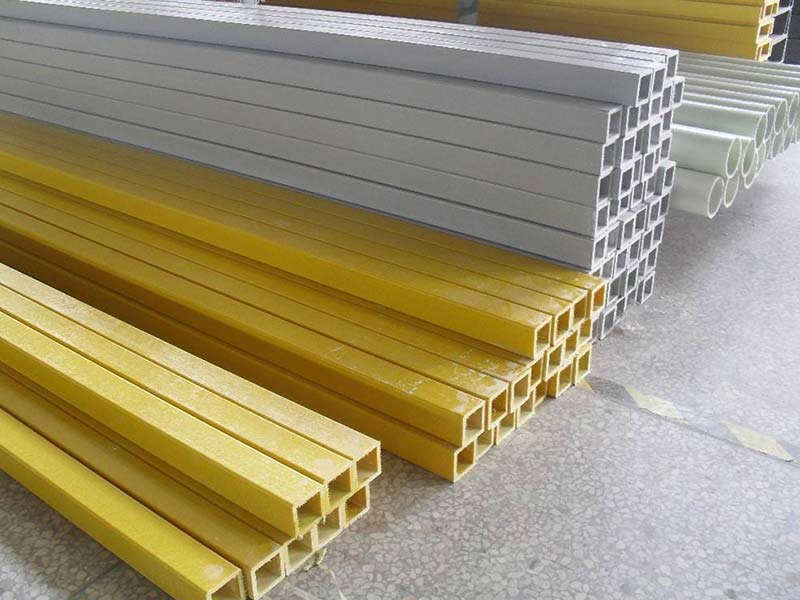
Before buying square fiberglass tube, ask the supplier these questions:
- What sizes and wall thicknesses can you manufacture?
- Can you produce custom square fiberglass tube based on drawings?
- Which resin system is suitable for my working environment?
- Can the tube be used outdoors for long-term exposure?
- Is a fire retardant option available if required?
- Can you provide cut-to-size lengths?
- Can the tube be drilled, chamfered, or processed before shipment?
- What tolerance should I expect for size and length?
- How will the tubes be packaged for transportation?
- Can you support repeat project orders with consistent specifications?
These questions help move the conversation from general product inquiry to real project matching.
Conclusion
Square fiberglass tube is not just another hollow profile. For industrial structures exposed to moisture, corrosion, outdoor weather, or electrical safety requirements, it can offer a practical balance of durability, weight reduction, low maintenance, and installation flexibility.
The right fiberglass square tube should be selected by more than size. Buyers need to consider wall thickness, resin system, working environment, load condition, connection method, surface finish, and processing requirements. For harsh environments such as wastewater treatment, chemical facilities, marine projects, outdoor platforms, and electrical infrastructure, these details can directly affect long-term performance.
As a square fiberglass tube manufacturer, we can support both standard and custom fiberglass square tubing for industrial frames, handrails, ladders, platforms, equipment structures, and project-based applications. If your project requires a specific size, color, wall thickness, resin system, or cut-to-length solution, custom pultruded fiberglass square tube can help make installation easier and long-term use more reliable.
FAQ
What is square fiberglass tube used for?
Square fiberglass tube is commonly used for industrial frames, handrails, ladders, platforms, equipment supports, guardrails, and outdoor structures.
Is square fiberglass tube suitable for outdoor use?
Yes. Square fiberglass tube is suitable for outdoor use because it offers good corrosion resistance, weather resistance, and low maintenance performance.
Is fiberglass square tube stronger than plastic tubing?
Yes. Fiberglass square tube is reinforced with glass fibers, giving it better strength, stiffness, and durability than ordinary plastic tubing.
Can square fiberglass tube replace steel tube?
In many corrosive, wet, outdoor, or non-conductive applications, square fiberglass tube can be a practical alternative to steel tube.
Can square fiberglass tube be customized?
Yes. Square fiberglass tube can be customized in size, wall thickness, length, color, resin type, and processing options such as cutting or drilling.