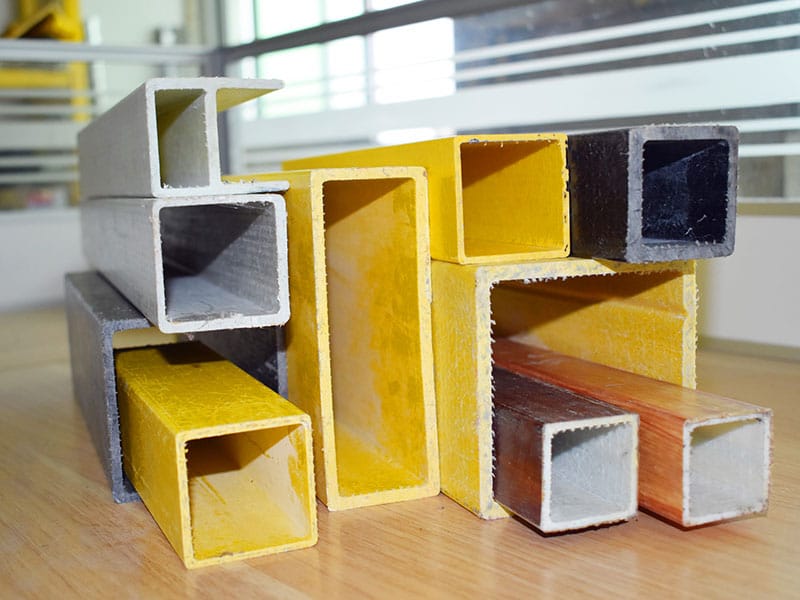
When an industrial structure is exposed to moisture, chemicals, salt air, electrical equipment, or outdoor weather, material selection becomes more than a construction detail. The wrong structural material can lead to corrosion, repeated coating maintenance, difficult installation, safety risks, and unexpected downtime.
That is why many engineers, contractors, and project buyers are evaluating FRP pultruded profiles for platforms, supports, walkways, cable systems, guardrails, equipment frames, and corrosive industrial environments. Compared with many traditional materials, FRP profiles offer corrosion resistance, lightweight handling, electrical insulation, and long-term durability when properly selected for the working environment.
This guide explains how to choose FRP pultruded profiles for industrial structures, what details to confirm before ordering, and how to avoid common specification mistakes that affect installation and service life.
Table of Contents
What Are FRP Pultruded Profiles?
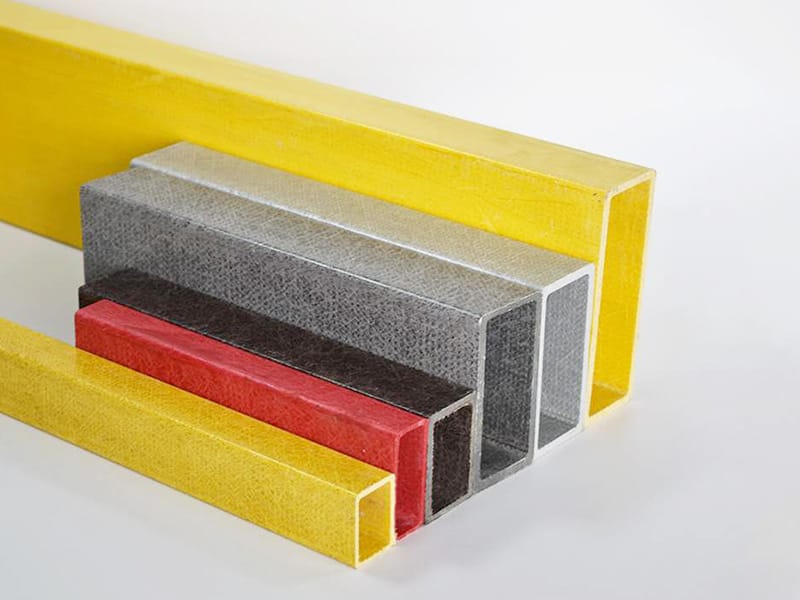
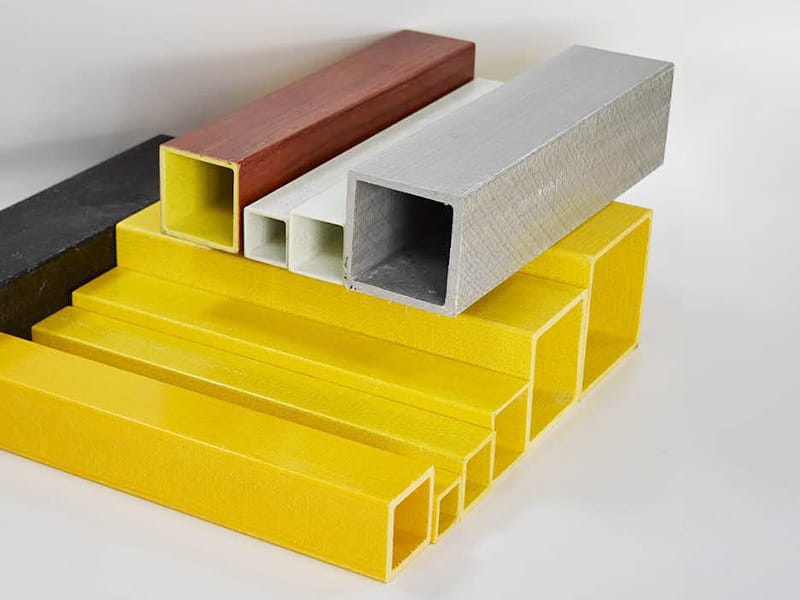
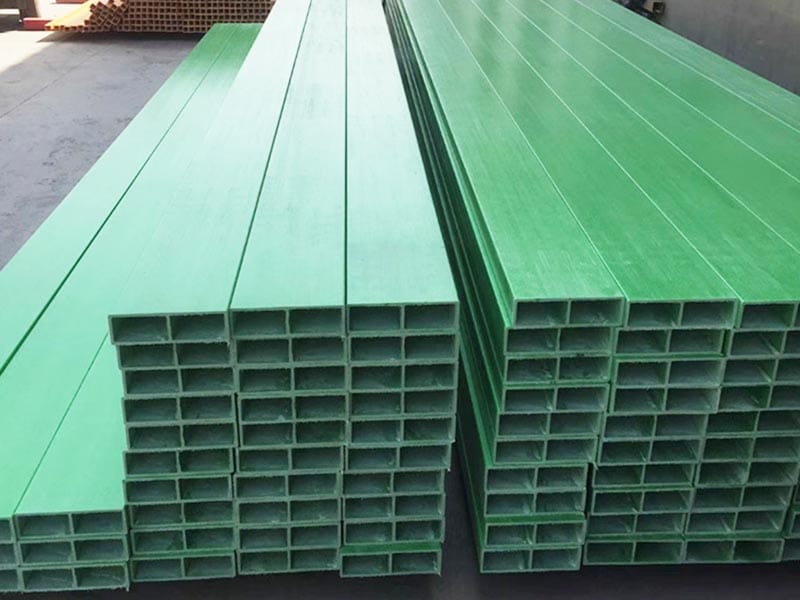
FRP pultruded profiles are fiberglass reinforced plastic structural shapes made through the pultrusion process. In pultrusion, continuous fiber reinforcements are impregnated with resin and pulled through a heated die to form profiles with a constant cross-section, such as channels, angles, tubes, rods, beams, and custom shapes. The basic process is widely described as a continuous method for producing fiber-reinforced plastics with constant cross-sections.
In simple terms, the fiber reinforcement provides mechanical strength, while the resin system helps determine corrosion resistance, chemical resistance, UV performance, flame retardancy, and surface durability. This combination makes FRP profiles useful in harsh industrial applications where steel, wood, or aluminum may require more maintenance.
Common FRP profile shapes include:
FRP channel beams
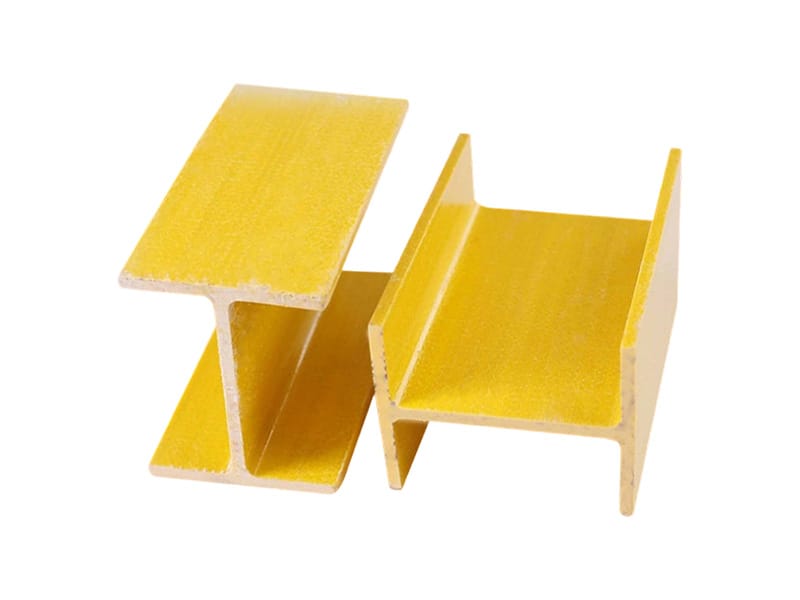
FRP I-beams
FRP square tubes
FRP round tubes
FRP angles
FRP flat bars
FRP rods
FRP customized structural profiles
For project buyers, the key is not only choosing a shape. The real decision is matching the profile geometry, resin system, load requirement, installation method, and environment.
Why Industrial Projects Use FRP Pultruded Profiles
Industrial structures often face conditions that ordinary building materials do not handle well over time. Chemical vapor, wastewater gas, salt spray, high humidity, outdoor UV exposure, and electrical equipment can all reduce material life or increase maintenance requirements.
FRP pultruded profiles are commonly selected because they offer several practical advantages.
They resist rust and corrosion in many humid, chemical, and outdoor environments.
They are lightweight, making transportation, cutting, lifting, and installation easier.
They are non-conductive, which is useful around electrical equipment and cable support systems.
They can be made into repeatable structural shapes with stable dimensions.
They help reduce repainting, coating repair, and corrosion-related replacement work.
They can be combined with other FRP products, such as FRP cable trays, FRP cable brackets, grating, guardrails, and covers.
For facilities where shutdown time is costly, the biggest value is often not the material itself. It is the reduction of future repair work in difficult, corrosive, or high-access areas.
FRP Pultruded Profiles vs Steel, Aluminum, and Wood
Material comparison should always be based on the project environment and structural requirement. FRP is not a universal replacement for every metal structure, but it is highly suitable when corrosion resistance, electrical insulation, and lightweight installation are priorities.
| Factor | FRP Pultruded Profiles | Steel | Aluminum | Wood |
|---|---|---|---|---|
| Corrosion resistance | Strong in many chemical, wet, and outdoor environments | Requires coating or protection | Good in some environments, but not all chemicals | Can rot, swell, or degrade |
| Weight | Lightweight | Heavy | Lightweight | Moderate |
| Electrical conductivity | Non-conductive | Conductive | Conductive | Usually insulating, but moisture-sensitive |
| Maintenance | Low when properly selected | Coating inspection often needed | May need surface protection in aggressive sites | May need treatment or replacement |
| Field installation | Easier handling and cutting | Heavier equipment often needed | Easier than steel | Easy, but lower durability |
| Best use scenario | Corrosive industrial, wastewater, coastal, electrical, outdoor structures | Heavy structural loads, high stiffness requirements | Lightweight non-corrosive applications | Temporary or low-exposure structures |
The main point is not that FRP is always “better.” The better material is the one that fits the operating environment. In chemical plants, wastewater treatment sites, coastal projects, and electrical infrastructure, FRP often solves problems that are difficult for conventional materials.
Common Applications of FRP Pultruded Profiles
FRP pultruded profiles can be used in many industrial and infrastructure scenarios. The following applications are especially common for inquiry-based projects.
Chemical Plant Support Structures
Chemical plants often expose structural materials to vapor, splashes, cleaning liquids, and corrosive atmospheres. FRP profiles can be used for equipment supports, pipe supports, cable supports, access frames, and maintenance structures.
For these applications, resin selection is critical. A general-purpose FRP profile may not be enough for strong acid, alkali, solvent, or high-temperature exposure. Buyers should share the chemical environment with the supplier before confirming the profile.
Wastewater Treatment Platforms and Covers
Wastewater treatment facilities are one of the most suitable environments for FRP structural profiles. Moisture, wastewater gas, chemical dosing areas, and outdoor exposure can shorten the life of metal structures.
FRP profiles can be used with grating, handrails, sewage tank covers, support beams, and access platforms. For buyers planning a complete corrosion-resistant system, it is useful to review Xinpeng’s wider FRP products instead of considering each component separately.
Cable Support and Electrical Infrastructure
Because FRP is non-conductive, it is often used around cable routing, substations, power facilities, and industrial electrical zones. FRP profiles can support cable trays, cable brackets, equipment frames, and protective structures.
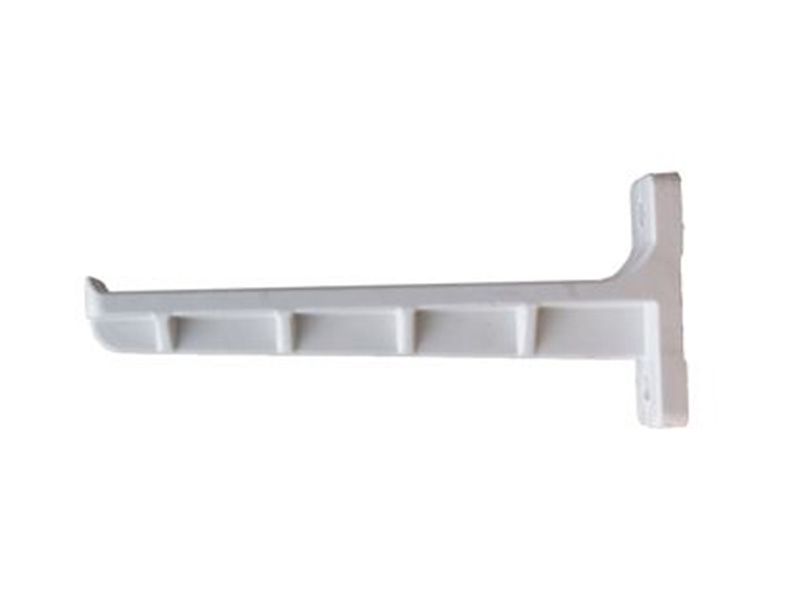
If your project already uses FRP cable tray, matching it with FRP brackets and structural profiles can create a more consistent corrosion-resistant cable support system.
Coastal and Marine Infrastructure
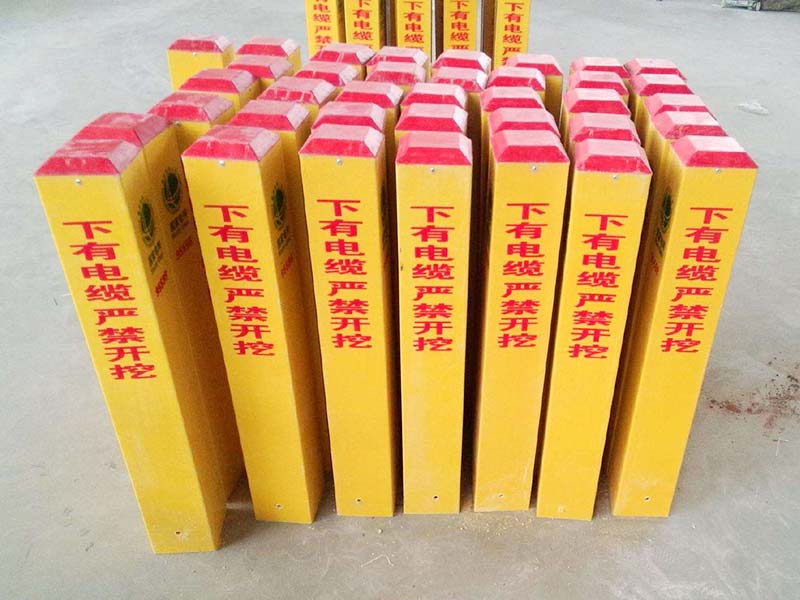
Salt air and humidity are difficult conditions for many metals. FRP pultruded profiles are often considered for coastal platforms, boardwalk supports, handrails, utility frames, marker posts, and exposed outdoor structures.
For outdoor coastal projects, buyers should confirm UV resistance, surface finish, color stability, fastening method, and expected support spacing.
Industrial Walkways, Guardrails, and Maintenance Access
FRP profiles can be used in walkways, ladders, handrails, guardrail systems, and maintenance platforms. For walking-working surfaces and fall protection, buyers should also check applicable safety regulations. OSHA’s guardrail requirements include load and surface-safety criteria for fall protection systems, which is important when designing elevated industrial access structures.
FRP profiles should be selected based on the actual load, span, connection design, platform layout, and project safety requirements.
Key FRP Profile Shapes and How to Choose Them
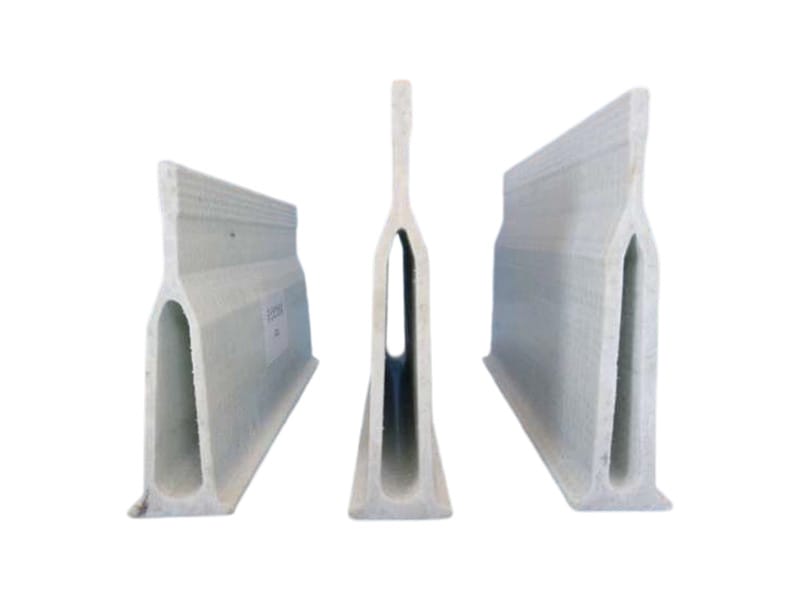
Different FRP profile shapes serve different structural functions. Choosing the correct shape can improve installation efficiency and reduce unnecessary material use.
FRP Channel Beam
An FRP channel beam is widely used for supports, frames, cable tray structures, equipment bases, and platform components. The open channel shape makes it easy to connect with bolts and brackets.
Choose FRP channel beams when you need a practical profile for moderate structural support, frame assembly, or corrosion-resistant mounting.
FRP Square Tube
FRP square tubes are suitable for frames, posts, fencing, guardrails, equipment structures, and lightweight support systems. They provide good appearance and easy assembly for modular structures.
Choose square tubes when the project needs clean geometry, post-like support, or enclosed structural appearance.
FRP I-Beam
FRP I-beams are used when higher bending resistance is needed over a span. They are often used in platforms, walkways, and support structures.
Choose I-beams when load capacity and span are more important than simple mounting convenience.
FRP Angle
FRP angles are useful for edge protection, small brackets, secondary supports, frame corners, and connection reinforcement.
Choose FRP angles for lightweight support, positioning, and accessory structures.
FRP Flat Bar and Rod
FRP flat bars and rods are used for reinforcement, spacing, bracing, fixing, and custom assemblies.
Choose these profiles when the structure needs smaller components rather than primary load-bearing beams.
Resin System: The Detail Buyers Should Not Ignore
The resin system has a major impact on FRP performance. It affects chemical resistance, UV resistance, flame retardancy, temperature tolerance, and long-term durability.
For general industrial environments, a standard corrosion-resistant resin may be suitable. For aggressive chemical exposure, stronger resin systems may be required. For outdoor projects, surface protection and UV resistance should be discussed. For electrical or safety-related projects, flame retardant performance may need to be confirmed.
When sending an inquiry, do not only say “corrosive environment.” Provide more specific information, such as:
Acid or alkali exposure
Chemical vapor type
Salt spray or coastal air
Outdoor UV exposure
Operating temperature range
Moisture or immersion risk
Cleaning method
Fire retardant requirement
This information helps the manufacturer recommend the right FRP pultruded profiles instead of only quoting a standard size.
Load, Span, and Deflection: What to Confirm Before Ordering
FRP profiles have excellent strength-to-weight advantages, but structural design should still be based on real load conditions. Buyers should not select profiles only by looking at shape and dimensions.
The most important design details include applied load, support span, connection method, safety factor, installation direction, and expected deflection limit.
Unlike steel, FRP has different stiffness behavior and should be evaluated according to FRP-specific material data and project requirements. For pultruded FRP profiles, testing and qualification may involve full-section compressive testing under standards such as ISO 23930, which applies to pultruded FRP profiles regardless of fiber or resin type.
For procurement, buyers should prepare:
Profile shape and size
Required length
Load per section
Support distance
Indoor or outdoor use
Connection method
Drawing or installation sketch
Required standard or test report
Special resin or flame retardant requirement
The more complete the technical information, the easier it is to receive an accurate recommendation.
Quality Inspection for FRP Pultruded Profiles
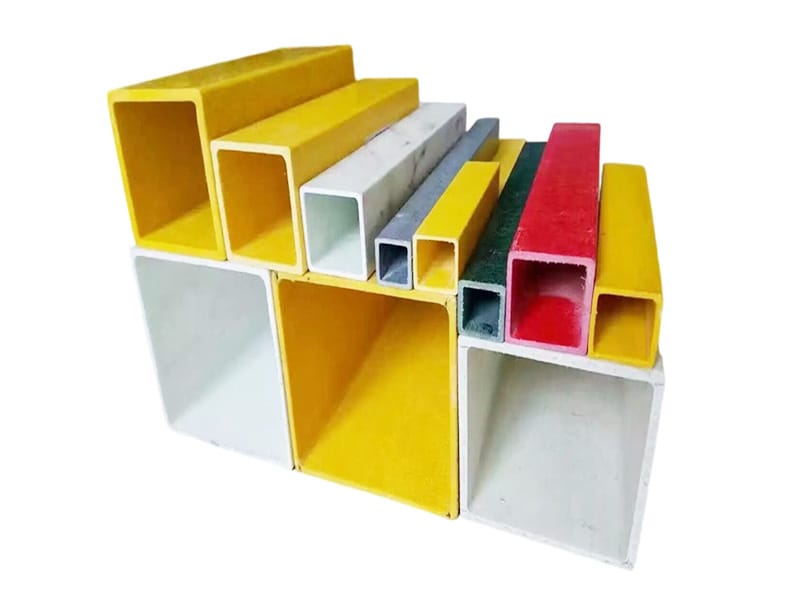
Quality is not only about strength. For FRP pultruded profiles, appearance, dimensions, fiber distribution, surface finish, straightness, and cutting quality all affect installation and long-term performance.
ASTM D7745 summarizes test methods commonly used for pultruded composites, while ASTM D4385 covers visual acceptance criteria for thermosetting reinforced plastic pultruded rods, bars, shapes, and sheets.
When purchasing FRP profiles, buyers should check:
Consistent profile dimensions
Smooth surface finish
No severe cracks or delamination
Clean cutting edges
Straightness over profile length
Suitable color and surface veil
Correct drilling or fabrication if required
Packaging protection for transport
For structural projects, ask for technical data or product information related to the selected profile. For customized projects, drawings and tolerances should be confirmed before production.
Installation Tips for Better Long-Term Performance
Even high-quality FRP pultruded profiles can underperform if installation is not planned correctly. The most common field problems are excessive span, incorrect fasteners, rough cutting edges, poor connection design, and mismatch between profile type and load direction.
During installation, keep these principles in mind:
Use proper support spacing according to load requirements.
Avoid over-tightening bolts that may damage the profile.
Use suitable washers or connection plates where needed.
Seal or protect cut edges when required by the application.
Avoid dragging profiles across rough ground before installation.
Store profiles on flat supports to prevent unnecessary deformation.
Confirm drilling positions before field fabrication.
Use compatible fasteners for the environment.
For outdoor and chemical environments, fastener selection is also important. A corrosion-resistant FRP structure can still fail early if metal fasteners are not suitable for the same environment.
How to Build a Complete FRP Structural System
Many industrial projects require more than one FRP component. For example, a wastewater treatment platform may need FRP beams, grating, handrails, covers, cable trays, and brackets. A cable support corridor may need FRP profiles, cable trays, cable brackets, covers, and customized supports.
Instead of buying separate parts without system planning, buyers should consider how the full structure works together.
A complete FRP system may include:
FRP pultruded profiles for beams and frames
FRP grating for walking surfaces
FRP handrails and guardrails for safety
FRP cable trays for cable routing
FRP cable brackets for tray support
FRP covers for tanks or channels
Custom fabricated FRP components
This approach improves compatibility, simplifies procurement, and reduces installation problems. Xinpeng supplies a range of FRP products and can support buyers who need standard profiles or customized corrosion-resistant solutions. You can view the product range on the FRP products page or learn more about material advantages through Why FRP.
Common Mistakes When Buying FRP Pultruded Profiles
The first mistake is selecting only by dimension. Two profiles with similar size may have different resin systems, wall thickness, fiber reinforcement, and mechanical performance.
The second mistake is ignoring chemical exposure. A profile that works in ordinary humidity may not be suitable for strong chemical vapor or repeated chemical washing.
The third mistake is applying metal design habits directly to FRP. FRP has different stiffness, connection behavior, and failure characteristics, so load and deflection should be reviewed carefully.
The fourth mistake is forgetting accessories and fabrication. Cutting, drilling, connection plates, covers, brackets, and fasteners should be considered before installation begins.
The fifth mistake is not sharing drawings. Even a simple route sketch or platform layout can help the supplier recommend better profile shapes and avoid missing parts.
Buyer Checklist Before Sending an Inquiry
Before requesting a quotation for FRP pultruded profiles, prepare the following information:
| Inquiry Detail | Why It Matters |
|---|---|
| Application industry | Helps identify corrosion and safety needs |
| Profile shape | Determines structural function |
| Profile size | Affects strength, span, and installation |
| Required length | Impacts production and packing |
| Load requirement | Supports correct profile selection |
| Support span | Affects deflection and safety |
| Chemical exposure | Helps select resin system |
| Outdoor or indoor use | Affects UV and surface requirements |
| Flame retardant need | Important for safety-related projects |
| Drawing or sketch | Reduces specification mistakes |
| Quantity and delivery plan | Helps production planning |
A clear inquiry saves time and improves quotation accuracy. For project support, buyers can contact Xinpeng with drawings, application details, and environmental conditions.
FAQ
What are FRP pultruded profiles used for?
FRP pultruded profiles are used for industrial platforms, walkways, frames, support beams, cable systems, guardrails, wastewater structures, chemical plant supports, and outdoor infrastructure.
Are FRP pultruded profiles suitable for corrosive environments?
Yes. FRP pultruded profiles are widely used in corrosive environments such as chemical plants, wastewater treatment facilities, coastal areas, and humid industrial sites. The resin system should be selected according to the actual exposure.
Can FRP profiles replace steel profiles?
FRP profiles can replace steel in many corrosion-resistant, lightweight, and electrically insulating applications. However, load, span, deflection, fire requirements, and connection design must be evaluated for each project.
Which FRP profile shape should I choose?
FRP channel beams are useful for frames and supports, I-beams are suitable for higher bending requirements, square tubes work well for posts and modular frames, and angles are often used for brackets or secondary supports.
Do FRP pultruded profiles need maintenance?
FRP profiles usually require less maintenance than metal in corrosive environments. However, periodic inspection is still recommended for connections, supports, surface damage, and chemical exposure areas.
Conclusion
FRP pultruded profiles are valuable materials for industrial structures exposed to corrosion, moisture, salt air, electrical equipment, and outdoor conditions. Their combination of corrosion resistance, lightweight handling, non-conductive properties, and design flexibility makes them suitable for chemical plants, wastewater treatment facilities, coastal infrastructure, cable support systems, maintenance platforms, and many other industrial applications.
The best results come from choosing the right profile shape, resin system, support span, load capacity, connection method, and accessories. Buyers should avoid selecting FRP profiles only by size and should provide clear project details before ordering.
For standard or customized FRP pultruded profile requirements, Xinpeng can support industrial buyers with product selection, fabrication discussion, and corrosion-resistant FRP solutions. Visit the FRP pultruded profiles page or contact Xinpeng to discuss your project requirements.