Modern engineering projects are increasingly shaped by one core requirement: materials must perform reliably in environments where traditional steel begins to fail. Moisture, chemical exposure, salt-laden air, and continuous operational stress have exposed the limitations of conventional structural systems.
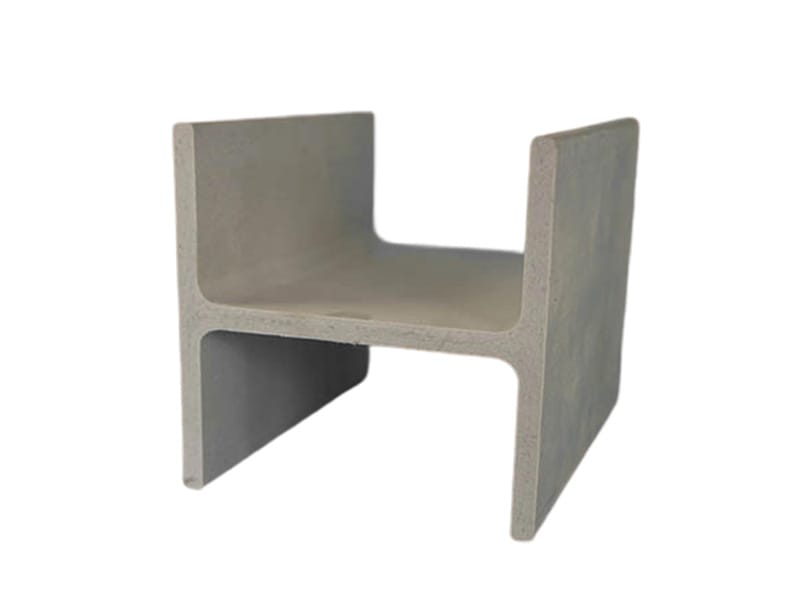
In response, FRP H Beam (Fiberglass Reinforced Plastic H-section beam) has moved from a niche alternative to a widely adopted structural solution across industrial and infrastructure sectors.
This article takes a practical, engineering-driven look at FRP H beams—how they are made, where they perform best, and what engineers typically evaluate when selecting them for real-world projects.
Table of Contents
Structural Shift in Modern Engineering Materials
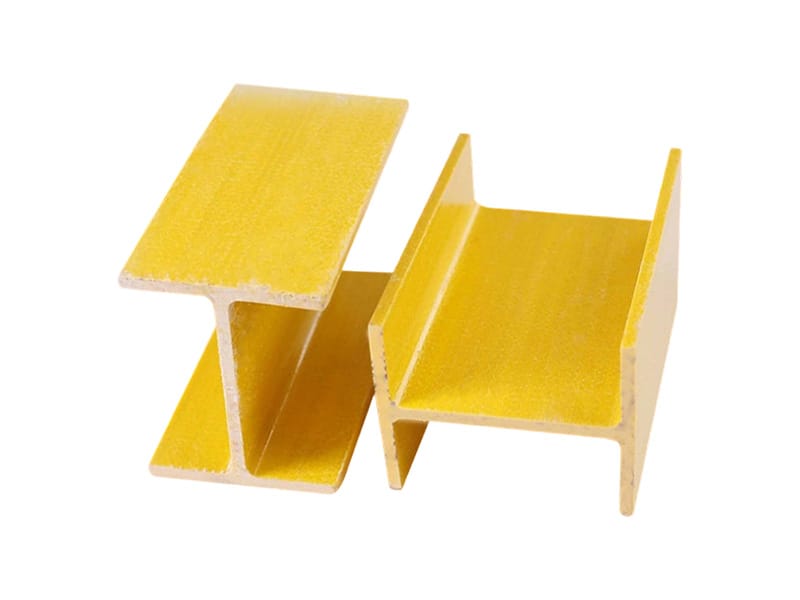
Over the past decade, material selection in construction and industrial engineering has shifted from “strength-first” thinking to a more balanced model that includes durability, maintenance demand, and environmental resistance.
FRP H beams fit into this shift because they are not defined by a single property. Instead, they combine several performance characteristics in one structural profile:
- Stable mechanical strength under directional loads
- Resistance to environmental degradation
- Predictable long-term performance behavior
- Compatibility with modular engineering systems
Unlike metallic beams that rely on mass and thickness, FRP beams rely on internal fiber architecture to achieve structural integrity.
How FRP H Beam Is Manufactured in Real Production Environments
The production of FRP H beams is typically based on a continuous pultrusion process. While the term may sound highly technical, the logic behind it is straightforward: fibers are guided, saturated, shaped, and cured in a continuous cycle.
A simplified breakdown of the process looks like this:
- Glass fiber reinforcements are aligned in controlled directions
- Resin systems are introduced to fully encapsulate the fibers
- The composite is pulled through a heated shaping die
- The profile is cured into a stable H-section geometry
- The finished beam is cut to required engineering lengths
What matters most here is not just the process itself, but the consistency it produces. In structural applications, consistency often determines performance more than peak strength values.
What Engineers Look For in FRP Structural Performance
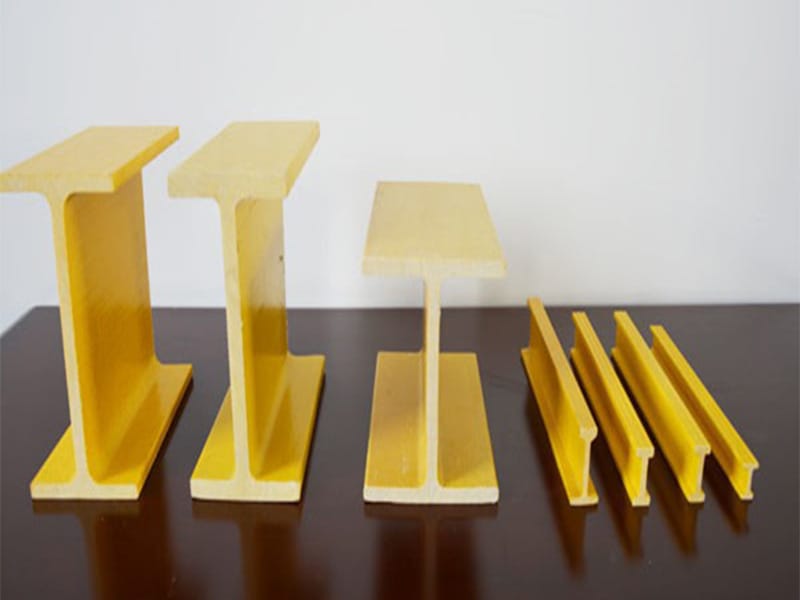
When FRP H beams are evaluated for real projects, engineers rarely focus on a single metric. Instead, they assess a combination of structural and environmental factors.
Load Behavior Under Practical Conditions
FRP beams distribute loads differently from steel. Instead of relying on mass, performance is influenced by fiber orientation and resin bonding integrity.
Resistance to Environmental Breakdown
In environments where corrosion is a long-term concern, FRP behaves predictably without the gradual weakening seen in metallic systems.
Electrical Safety Characteristics
Because FRP is non-conductive, it introduces an additional safety layer in infrastructure where electrical exposure is a factor.
Dimensional Stability Over Time
One often overlooked advantage is that FRP maintains its geometry under long-term exposure, reducing deformation risks in structural frameworks.
Design Flexibility and Engineering Adaptation
One reason FRP H beams are increasingly used in modern projects is their adaptability. Unlike traditional steel sections, FRP profiles can be engineered with more flexibility in mind.
Typical customization considerations include:
- Adjusting flange width and web thickness
- Modifying structural reinforcement layout
- Selecting surface textures for functional requirements
- Designing for project-specific load conditions
- Adapting geometry for modular assembly systems
This flexibility makes FRP suitable not only for standard construction but also for specialized engineering environments where off-the-shelf steel sections are insufficient.
Where FRP H Beam Performs Best in Real Applications
Rather than treating FRP as a universal replacement for steel, it is more accurate to view it as a material optimized for specific environments.
Common application environments include:
Chemical processing zones
Where exposure to reactive substances is continuous and unavoidable.
Marine and offshore structures
Where saltwater corrosion is a primary failure driver.
Power and electrical infrastructure
Where non-conductive properties contribute to operational safety.
Water treatment and drainage systems
Where constant humidity accelerates degradation of traditional materials.
Industrial platforms and access structures
Where lightweight construction improves installation efficiency.
In each of these cases, the material advantage is not theoretical—it is directly linked to operational stability.
Comparing FRP and Steel from a Practical Engineering Perspective
Instead of a laboratory comparison, it is more useful to evaluate how both materials behave in long-term field conditions.
Steel performs well in high-load environments but requires protective systems when exposed to corrosion risks. FRP, on the other hand, is inherently resistant to many of these environmental stressors.
A few practical differences often considered during design include:
- Steel requires ongoing surface protection in aggressive environments
- FRP maintains structural performance without protective coatings
- Steel structures may require periodic reinforcement over time
- FRP systems are typically evaluated more on initial design accuracy than maintenance planning
This is why material selection is increasingly project-specific rather than universally standardized.
Manufacturing Quality as a Core Performance Factor
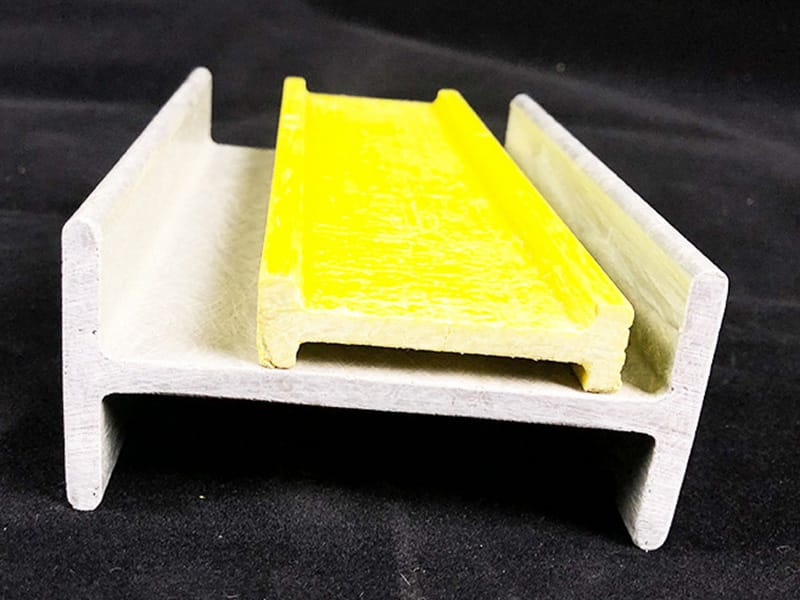
In FRP production, structural performance is closely tied to manufacturing control. Small variations in fiber distribution or resin consistency can influence final behavior under load.
Key production control areas typically include:
- Fiber alignment accuracy
- Resin impregnation consistency
- Temperature-controlled curing cycles
- Dimensional calibration across production runs
- Batch-level material traceability
These factors are often more important than theoretical specifications because they determine how the material behaves in real-world installations.
Practical Considerations in Installation and Usage
FRP H beams are generally easier to handle than traditional steel sections due to their reduced weight. However, installation practices still matter for long-term performance.
Common field considerations include:
- Using mechanical fastening systems rather than welding
- Avoiding excessive localized stress points
- Ensuring proper load distribution across joints
- Cutting and drilling with appropriate tooling methods
- Following project-specific structural guidelines
When installed correctly, FRP systems typically operate with minimal intervention over long service periods.
Selecting a Structural Material in Modern Projects
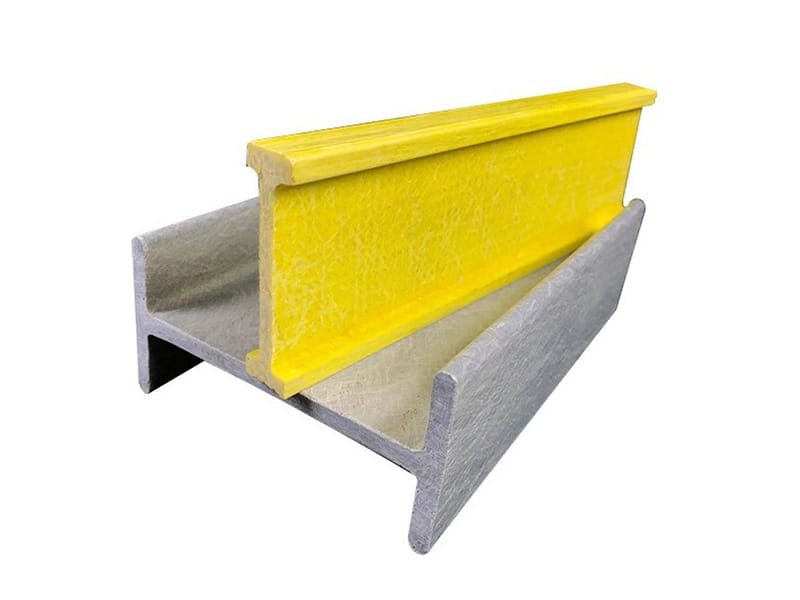
Material selection today is no longer based purely on strength or cost metrics. Instead, engineers evaluate lifecycle behavior, environmental compatibility, and long-term operational stability.
FRP H beams are most effective when the project requires:
- Resistance to aggressive environmental conditions
- Reduced maintenance dependency
- Predictable long-term structural behavior
- Lightweight structural systems for complex installations
This is why FRP has become increasingly visible in infrastructure sectors where downtime and maintenance are costly and disruptive.
Conclusion
FRP H Beam has become a practical structural solution for environments where traditional materials face predictable limitations. Its value is not defined by a single property, but by how multiple performance characteristics work together in real engineering conditions.
For projects exposed to corrosion, moisture, electrical risk, or long-term environmental stress, fiberglass reinforced structural beams offer a stable and increasingly preferred alternative.
As material science continues to evolve, FRP is no longer positioned as an experimental option, but as a functional component in modern engineering design strategies.
FAQ
What is FRP H Beam used for?
FRP H Beam is mainly used in structural frameworks such as industrial platforms, chemical plants, marine structures, power facilities, and water treatment systems where corrosion resistance and durability are required.
How strong is FRP H Beam compared to steel?
FRP H Beam offers high directional strength with a much lighter weight. While steel has higher overall density strength, FRP performs better in environments where corrosion, moisture, or chemical exposure affects steel performance over time.
Can FRP H Beam be used outdoors?
Yes. FRP H Beam is widely used in outdoor environments because it is resistant to UV exposure, moisture, saltwater, and harsh weather conditions, maintaining stable performance over long periods.
Is FRP H Beam maintenance-free?
FRP H Beam requires very low maintenance. Unlike steel, it does not rust or corrode, which significantly reduces the need for surface treatment, repainting, or structural repair in most applications.
Can FRP H Beam be customized for engineering projects?
Yes. FRP H Beam can be customized in terms of size, load requirements, surface finish, and structural design to meet specific engineering and industrial project needs.