Table of Contents
Introduction
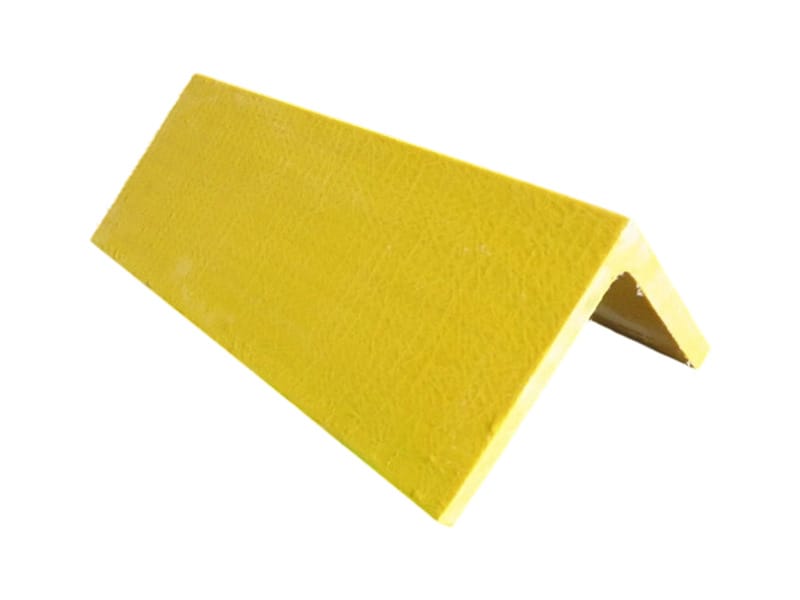
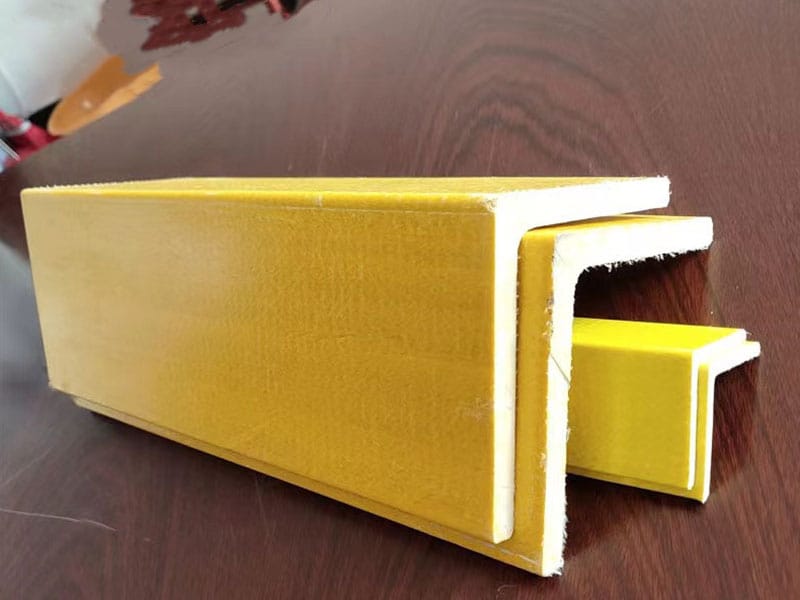
In industrial environments where corrosion, moisture, and chemical exposure are constant challenges, material selection often determines how long a structure will remain reliable. FRP angle bars have gradually moved from a niche solution to a widely used structural option in engineering projects that prioritize durability and low maintenance.
Unlike traditional metallic profiles, FRP angle bars are built on a composite structure that combines reinforcement fibers with a polymer matrix. The result is a material that performs consistently in harsh conditions where steel or aluminum typically require frequent maintenance or protective coatings.
From a manufacturing perspective, the value of FRP angle bars lies not only in their physical properties but also in their adaptability. They can be produced in multiple profiles, customized dimensions, and specific performance grades depending on the engineering requirement.
What Makes FRP Angle Bar Structurally Different
FRP angle bars are not simply “plastic alternatives” to metal sections. Their internal structure is engineered, with continuous glass fiber reinforcement embedded in thermoset resin. This creates directional strength rather than uniform isotropic behavior found in metals.
In practical terms, this means:
- Strength can be optimized along load-bearing directions
- Deformation remains minimal under long-term stress
- Environmental exposure does not degrade structural integrity easily
Another key difference is electrical behavior. Fiberglass angle bars are naturally non-conductive, which changes how they are used in electrical zones or sensitive industrial environments.
Performance Characteristics That Matter in Real Projects
When engineers evaluate FRP angle bars, specifications alone are not enough. Performance in real conditions is what drives adoption.
Key characteristics include:
- Stability under continuous moisture exposure
- Resistance to acidic and alkaline environments
- Structural consistency under temperature variation
- Non-corrosive behavior without surface treatment
- Long service life with minimal intervention
Unlike coated metals, the performance of FRP is not dependent on surface protection. Even when the surface is exposed, the internal structure remains unaffected.
Where FRP Angle Bars Are Actually Used
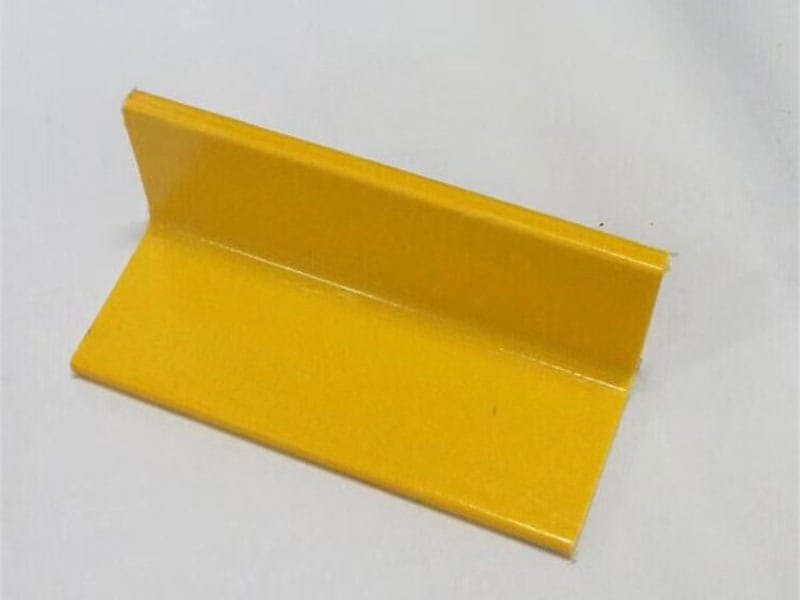
Instead of listing industries in isolation, it is more practical to look at functional roles fiberglass angle bars play in real engineering systems.
Structural support systems in aggressive environments
FRP angle bars are often used where metal supports would deteriorate too quickly, such as chemical processing zones or humid industrial facilities.
Platform and walkway frameworks
Their combination of light weight and strength makes them suitable for elevated structures where load reduction is important.
Marine and coastal installations
Salt exposure accelerates corrosion in metals, but FRP maintains stability over long service periods without protective coatings.
Electrical and utility zones
Because FRP does not conduct electricity, it is frequently selected for structures near energized systems or sensitive equipment areas.
Wastewater and treatment facilities
Constant exposure to moisture and chemical agents makes FRP one of the more stable choices for long-term infrastructure.
Specification Thinking: How Engineers Actually Select FRP Angle Bars
In real procurement practice, selection is rarely based on a single parameter. Engineers usually evaluate a combination of structural requirements and environmental conditions.
Instead of focusing only on size, the selection process often includes:
- Load direction and stress distribution
- Exposure environment (chemical, marine, industrial)
- Required lifespan of the structure
- Installation constraints on-site
- Compatibility with other structural components
Standard dimensions exist, but in practice, customization is common. Manufacturing flexibility is often a deciding factor in supplier selection.
Why FRP Angle Bar Replaces Traditional Metal Sections in Some Projects
The shift toward FRP angle bars is not driven by a single advantage but by a combination of operational factors.
Metals still perform well in many general construction scenarios. However, in environments where maintenance access is limited or costly, FRP becomes more practical.
Typical reasons for substitution include:
- Reduction in long-term maintenance dependency
- Avoidance of corrosion-related structural failure
- Simplification of installation due to reduced weight
- Elimination of surface coating cycles
- Improved safety in electrical environments
The decision is often less about initial material preference and more about lifecycle performance.
Manufacturing Perspective: What Defines Quality in FRP Angle Bars
From a production standpoint, consistency is more important than isolated performance figures.
Key manufacturing control points include:
- Fiber alignment consistency during pultrusion
- Resin curing stability across production batches
- Dimensional accuracy in continuous extrusion
- Surface finish uniformity
- Internal void control and structural density
Small deviations in these factors can lead to noticeable differences in long-term performance, especially in load-bearing applications.
Installation Reality: What Often Gets Overlooked
Installation of fiberglass angle bars is generally straightforward, but engineering mistakes often come from treating them like metal sections.
A few practical considerations:
- Over-tightening mechanical fasteners can create localized stress points
- Cutting methods should avoid fiber fraying and edge damage
- Load distribution should account for material flexibility differences
- Joint design should avoid rigid constraints that limit natural material response
In many projects, performance issues are not caused by the material itself, but by incorrect installation assumptions.
FRP Angle Bar in Modern Structural Design Trends
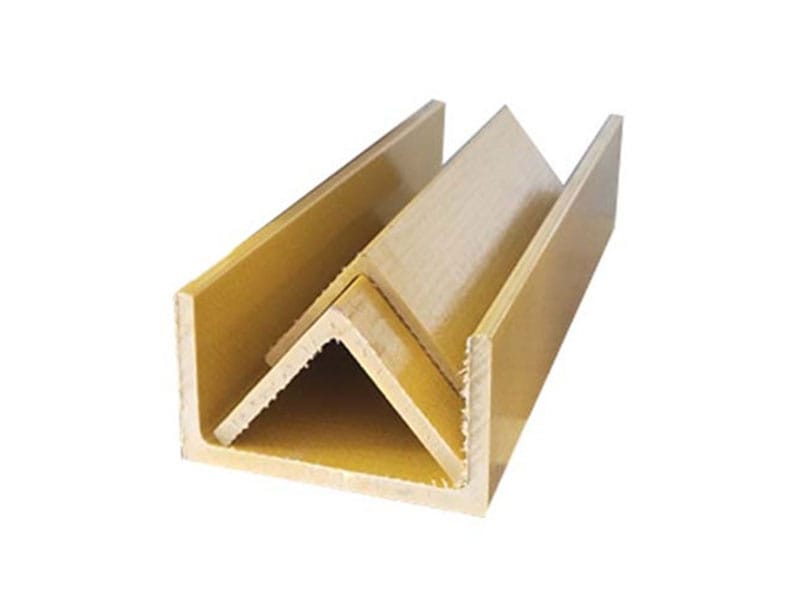
Structural engineering is gradually shifting toward hybrid material systems. Instead of relying solely on steel frameworks, many modern designs integrate composite profiles where appropriate.
FRP angle bars fit into this trend as a supporting structural element that improves:
- Corrosion resilience of entire systems
- Weight efficiency in elevated structures
- Maintenance reduction in inaccessible zones
- Safety in electrically sensitive environments
This shift is especially visible in infrastructure projects focused on long-term operational efficiency rather than short-term construction speed.
Conclusion
FRP angle bars are no longer a specialized alternative material. They have become a practical structural option in environments where traditional metals struggle with corrosion, maintenance demands, and environmental exposure.
From a manufacturing standpoint, the key value lies in controllability—dimensions, reinforcement structure, and performance consistency can all be engineered according to project requirements.
For engineering projects that prioritize durability and lifecycle stability, FRP angle bars offer a balanced solution that aligns with modern infrastructure demands. Selecting the right specification and working with a capable manufacturer ensures the material performs as intended throughout its service life.
FAQ
What is an FRP angle bar used for?
FRP angle bars are mainly used in structural support systems where corrosion resistance, lightweight performance, and durability are required, such as industrial platforms, chemical plants, and marine structures.
How strong is an FRP angle bar compared to steel?
FRP angle bars offer high tensile strength for their weight, but their behavior is different from steel. They are lighter and corrosion-resistant, while steel generally provides higher overall stiffness in heavy-load applications.
Can FRP angle bars be used outdoors?
Yes. FRP angle bars perform well in outdoor environments due to their resistance to UV exposure, moisture, and temperature variation, making them suitable for long-term external installations.
Do fiberglass angle bars rust or corrode over time?
No. FRP materials are non-metallic, so they do not rust or corrode, even in harsh environments such as coastal areas, chemical plants, or wastewater facilities.
How do you choose the right FRP angle bar size?
The selection depends on load requirements, structural design, and environmental conditions. Engineers typically evaluate thickness, dimensions, and application scenarios before final selection.