Industrial flooring is often judged by one simple question: can people walk on it safely? But in chemical plants, wastewater treatment facilities, power stations, offshore sites, and outdoor industrial platforms, that question is only the beginning.
A floor grating system must handle corrosion, moisture, chemical exposure, equipment access, drainage, slip resistance, load requirements, installation conditions, and long-term maintenance. When the wrong material is selected, the result may be rust, loose panels, unsafe walking surfaces, frequent replacement, and unnecessary downtime.
That is why many engineers and project buyers choose FRP grating for industrial flooring and access systems. FRP grating, also known as fiberglass grating, is a composite grating made with fiberglass reinforcement and resin. It is widely used where metal grating may corrode, become slippery, or require repeated coating maintenance.
This guide explains how to choose FRP grating for industrial projects, how molded and pultruded grating differ, what details to confirm before purchasing, and how to avoid specification mistakes that affect safety and service life.
Table of Contents
What Is FRP Grating?
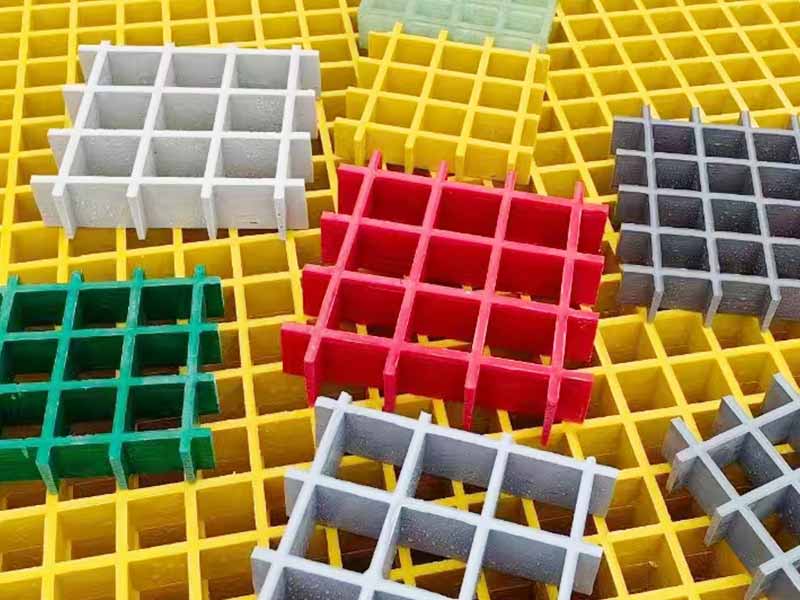
FRP grating is a fiber-reinforced plastic grating panel designed for flooring, walkways, platforms, trench covers, stair treads, drainage areas, and industrial access surfaces. It combines glass fiber reinforcement with a resin matrix to create a lightweight but strong composite material.
Unlike steel grating, FRP grating does not rely on a metal surface coating to resist rust. Its corrosion resistance comes from the composite material itself, especially the selected resin system. This makes it useful in corrosive and wet environments where ordinary metal grating may require frequent maintenance.
You can learn more about the material category from this overview of fiberglass reinforced plastic grating. For project selection, however, the most important question is not only “what is FRP grating?” It is “which FRP grating is right for this working environment?”
Why Industrial Projects Use FRP Grating
FRP grating is often selected because it solves multiple site problems at the same time. In harsh industrial environments, flooring materials must do more than support foot traffic.
A good FRP grating system can help with:
Corrosion resistance in chemical, wastewater, marine, and humid environments
Slip-resistant walking surfaces for wet or oily work areas
Lightweight installation in elevated platforms or difficult-access spaces
Electrical insulation around electrical equipment and cable zones
Drainage and ventilation through open mesh design
Reduced repainting and coating maintenance compared with many metal systems
Compatibility with other FRP structures such as FRP floor beams, handrails, brackets, covers, and FRP pultruded profiles
For buyers, the main value is not simply replacing metal with fiberglass. The real value is reducing long-term maintenance pressure in areas where corrosion, moisture, and safety risks are difficult to control.
Common Applications of FRP Grating
FRP grating can be used in many industrial and municipal environments. The following applications are among the most common for B2B projects.
Chemical Plant Flooring
Chemical plants often expose flooring systems to acidic vapor, alkaline liquids, cleaning agents, solvents, and chemical splashes. FRP grating can be used for operating platforms, inspection walkways, equipment access areas, drainage zones, and maintenance channels.
For these applications, resin selection is critical. A general FRP grating panel may not be suitable for every chemical environment. Buyers should describe the chemical exposure clearly before ordering.
Wastewater Treatment Walkways
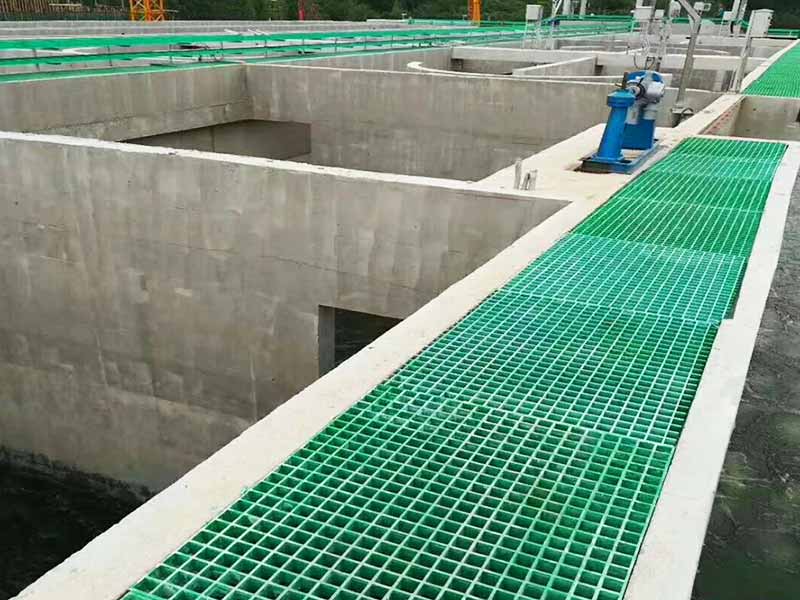
Wastewater treatment facilities are one of the strongest application areas for FRP grating. Moisture, wastewater gases, dosing chemicals, and outdoor exposure can quickly damage some traditional materials.
FRP walkway grating is commonly used around tanks, pump stations, aeration systems, sludge treatment areas, dosing rooms, and maintenance platforms. In areas where odor, splashing, or falling objects are concerns, a matching FRP grating cover may also be considered.
Trench Covers and Drainage Areas
FRP trench cover systems are useful in drainage channels, cable trenches, inspection pits, and plant utility corridors. Open mesh grating allows drainage and ventilation, while covered grating can help reduce splashing, odor, or debris entry.
When selecting FRP trench covers, buyers should confirm the expected load, span, traffic type, panel thickness, support edge condition, and whether solid covers are required.
Power Plant and Electrical Infrastructure
FRP grating is non-conductive, making it useful for certain electrical environments, cable support areas, transformer zones, substations, and power plant maintenance access systems.
For power-related safety barriers or enclosure needs, Xinpeng also supplies FRP grating fencing for power plants, which combines fiberglass grating panels with FRP structural framing.
Offshore, Coastal, and Marine Sites
Salt air, humidity, and outdoor exposure make coastal and offshore environments difficult for many materials. FRP grating can be used for walkways, platforms, dock access, maintenance areas, and drainage flooring where corrosion resistance and lightweight installation are important.
In these projects, buyers should pay attention to UV resistance, fastener material, load rating, support span, and surface texture.
Molded FRP Grating vs Pultruded FRP Grating
One of the most important buying decisions is choosing between molded FRP grating and pultruded FRP grating. Both are useful, but they are not the same.
| Factor | Molded FRP Grating | Pultruded FRP Grating |
|---|---|---|
| Structure | One-piece molded grid structure | Load bars made from pultruded profiles |
| Strength direction | Good bidirectional strength | Stronger in the main bearing direction |
| Corrosion resistance | Excellent for many chemical environments | Strong, depending on resin and design |
| Cutouts | Better tolerance for field cutouts | Cutouts require more design attention |
| Common use | Chemical plants, wastewater, platforms, drainage areas | Long-span walkways, bridges, industrial platforms |
| Surface options | Gritted, concave, covered, micro-mesh | Gritted or textured top surface |
| Best selection logic | Choose for chemical resistance, flexibility, complex layouts | Choose for higher span/load efficiency in one direction |
Molded FRP grating is often preferred where chemical resistance, multidirectional support, and cutout flexibility matter. Pultruded FRP grating is often selected where a stronger load-bearing direction or longer support span is needed.
The best choice depends on the project’s load, span, support layout, chemical environment, and installation method.
How to Choose the Right FRP Grating
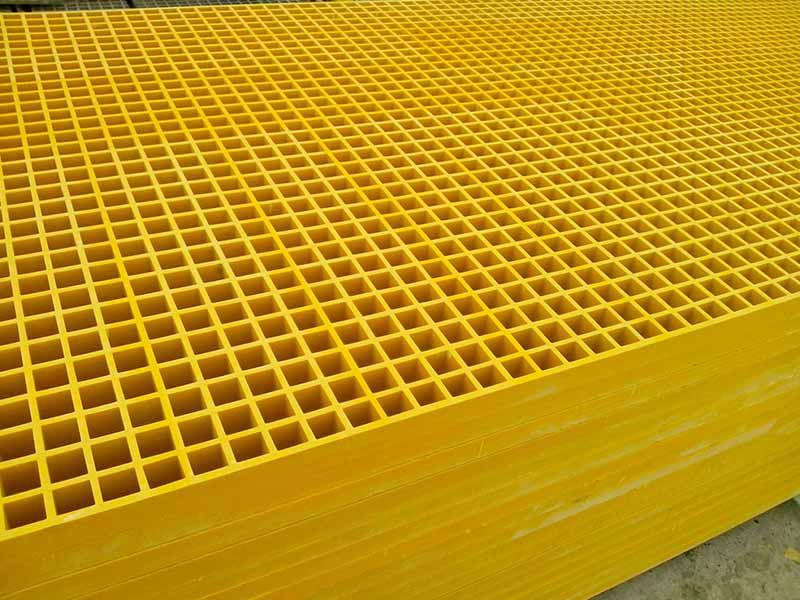
Choosing FRP grating only by panel size is a common mistake. A proper specification should consider environment, load, mesh size, surface type, resin system, installation method, and safety requirements.
Confirm the Working Environment
The first step is to define where the grating will be installed. Indoor and outdoor areas have different requirements. Chemical plants, wastewater facilities, coastal sites, and power infrastructure all need different material considerations.
Important details include:
Chemical exposure type
Humidity level
Indoor or outdoor installation
UV exposure
Operating temperature
Water, oil, or chemical splashing
Cleaning frequency
Possible impact or vibration
If the working environment is aggressive, ask the supplier whether a special resin system or surface treatment is recommended.
Confirm Load and Support Span
FRP grating must be selected according to load and span. A panel that works for pedestrian access may not be suitable for equipment traffic, carts, or concentrated loads.
Before ordering, prepare:
Expected live load
Pedestrian or equipment traffic
Panel support distance
Required deflection limit
Panel thickness
Support frame design
Whether loads are uniform or concentrated
A common procurement mistake is selecting grating thickness without considering span. The same panel can perform very differently depending on how it is supported.
Choose the Right Mesh Size
Mesh size affects drainage, slip feel, light transmission, ventilation, object fall-through risk, and walking comfort.
Large mesh grating provides good drainage and ventilation. Smaller mesh grating can reduce the risk of small tools or objects falling through. Micro-mesh or covered grating may be preferred in pedestrian-heavy zones or areas requiring more surface coverage.
For trench covers, tank walkways, and platforms above equipment, mesh size should be selected carefully based on worker safety and maintenance needs.
Select the Surface Type
Surface texture directly affects walking safety. Common FRP grating surface options include gritted surface, concave surface, smooth covered surface, and patterned cover surface.
Gritted surfaces provide stronger slip resistance in wet or oily environments. Concave surfaces are often used where moderate slip resistance and easier cleaning are needed. Covered grating provides a more closed surface and can help reduce splashing, odor, or debris drop-through.
For workplace walking surfaces, buyers should also consider relevant safety guidance such as OSHA walking-working surfaces, especially for platforms, stairs, ladders, and elevated access areas.
Match the Resin System to the Site
The resin system is one of the most important factors in FRP grating performance. It affects chemical resistance, flame retardancy, UV performance, temperature resistance, and durability.
Common resin choices may include general-purpose resin, corrosion-resistant resin, flame-retardant resin, or higher chemical-resistance resin. The correct choice depends on the working environment.
Instead of simply asking for “FRP grating,” buyers should describe the actual exposure. For example, wastewater treatment, acid vapor, alkaline cleaning, salt air, and solvent exposure are different conditions.
FRP Grating vs Steel Grating
Steel grating is strong and widely used, but it may require coating, galvanizing, painting, or regular inspection in corrosive environments. FRP grating is often selected when corrosion resistance, lightweight handling, and electrical insulation are priorities.
| Selection Factor | FRP Grating | Steel Grating |
| Corrosion resistance | Strong in many corrosive environments | Depends on coating or material protection |
| Weight | Lightweight and easier to handle | Heavier |
| Electrical conductivity | Non-conductive | Conductive |
| Surface maintenance | Lower in suitable environments | Coating inspection may be required |
| Field cutting | Easier with proper tools | Requires metal cutting tools |
| Slip resistance | Gritted or textured surfaces available | Depends on surface design |
| Best use | Chemical, wastewater, coastal, electrical, humid sites | Heavy-duty industrial areas where metal strength is required |
FRP grating is not always a direct replacement for steel in every structure. For very high load or special mechanical requirements, engineering evaluation is still necessary. However, in corrosive and wet environments, FRP can often reduce maintenance and improve long-term usability.
Design Details That Affect Safety
FRP grating safety is not only about the panel. It also depends on support design, fixing clips, edge distance, cutouts, walking direction, surface condition, and installation quality.
Important safety details include:
Correct panel orientation
Proper support spacing
Secure hold-down clips
Enough bearing area on supports
Smooth cut edges
Correct treatment around openings
Suitable stair tread nosing
Consistent surface texture
Good drainage and cleaning access
For elevated platforms, the grating should also be considered together with guardrails, toe plates, ladders, stairs, and handrail systems. A safe access system is always a complete system, not just one grating panel.
Common Procurement Mistakes to Avoid
The first mistake is choosing only by thickness. Thickness matters, but load capacity also depends on mesh type, span, support condition, panel structure, and resin system.
The second mistake is ignoring the chemical environment. If the grating is used in a chemical plant or wastewater site, resin selection should be discussed before ordering.
The third mistake is forgetting cutouts. Many industrial platforms require openings for pipes, valves, cables, pumps, or equipment supports. These openings should be planned in advance to avoid weak edges and poor field cutting.
The fourth mistake is selecting the wrong surface. Wet, oily, or outdoor walking areas usually need stronger slip resistance than dry indoor spaces.
The fifth mistake is not considering accessories. Hold-down clips, support beams, edge frames, stair tread nosing, and covers can affect installation quality and safety.
The sixth mistake is buying grating separately from the platform structure. In many projects, FRP grating should be matched with FRP floor beams, FRP channel beams, handrails, covers, and supports for better system compatibility.
FRP Grating for Wastewater Treatment Projects
A wastewater treatment project may require walkways around tanks, covers over channels, platforms near pumps, and access flooring near dosing systems. These areas usually involve moisture, corrosion, outdoor exposure, and frequent maintenance access.
A practical FRP grating system for wastewater treatment may include molded FRP grating for chemical and moisture resistance, covered grating for splash or odor control, FRP structural beams for platform support, and FRP handrails for elevated access.
Buyers should provide the site layout, support span, load requirement, panel dimensions, chemical exposure, and any special requirements for covers or cutouts. With this information, the supplier can recommend a more suitable grating solution instead of simply quoting standard panels.
FRP Grating for Chemical Plant Platforms
Chemical plant platforms often need grating around tanks, pipelines, valves, reactors, pumps, inspection points, and maintenance areas. The grating must resist corrosion while also allowing safe access for operators.
For these projects, the resin system is especially important. Buyers should provide the chemical name or chemical category, concentration range if available, temperature, exposure method, and cleaning process.
A typical chemical plant platform may require:
Corrosion-resistant molded FRP grating
Gritted surface for slip resistance
FRP support beams
FRP handrails and toe plates
Customized cutouts for pipes and equipment
Hold-down clips suitable for the environment
Drainage and ventilation planning
For complete material matching, buyers can review Xinpeng’s broader FRP products or learn more about composite material advantages through Why FRP.
Installation Tips for Better Performance
Proper installation can extend the service life of FRP grating and reduce safety problems. Even a high-quality panel can perform poorly if it is installed with excessive span, loose fixing clips, poor support contact, or rough cut edges.
During installation, keep these points in mind:
Place panels according to the required load-bearing direction.
Use proper support spacing based on the grating specification.
Secure panels with suitable hold-down clips.
Avoid unsupported cutouts or large openings without reinforcement.
Use appropriate tools for cutting and drilling.
Smooth or seal cut edges when required.
Avoid dragging panels across rough surfaces before installation.
Check fastener corrosion resistance for the working environment.
Inspect panels after installation before opening the area for use.
For outdoor areas, also consider thermal movement, UV exposure, drainage slope, and the surrounding support structure.
Buyer Checklist Before Requesting a Quote
Before sending an inquiry for FRP grating, prepare the following information:
| Inquiry Detail | Why It Matters |
| Application area | Helps identify suitable grating type |
| Indoor or outdoor use | Affects UV and weather resistance |
| Chemical exposure | Helps select the resin system |
| Panel size | Determines production and layout planning |
| Mesh size | Affects drainage, safety, and walking comfort |
| Load requirement | Determines thickness and structure |
| Support span | Affects deflection and safety |
| Surface type | Affects slip resistance |
| Need for covers | Important for trench, odor, splash, or debris control |
| Cutouts or drawings | Helps avoid installation problems |
| Accessories | Ensures complete system supply |
A clear inquiry helps the supplier recommend the correct FRP grating instead of only matching a dimension.
Why Work With Xinpeng for FRP Grating Projects
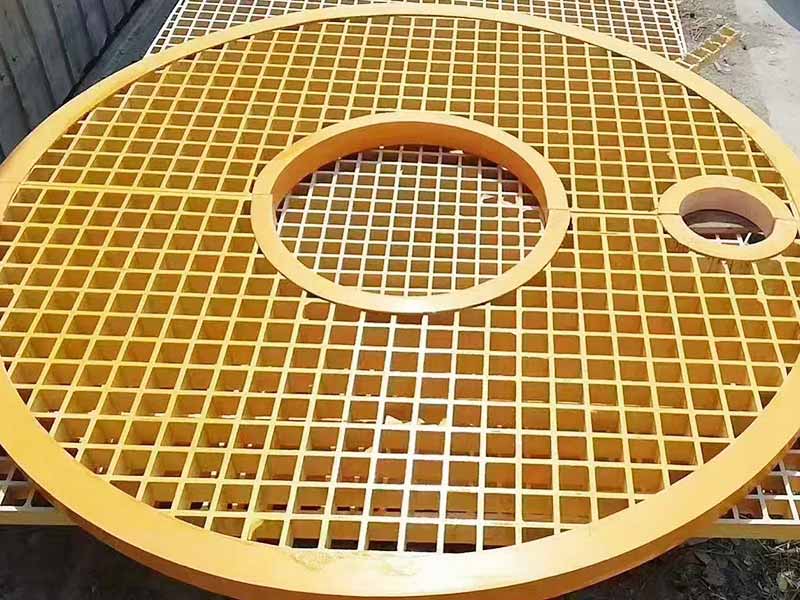
Xinpeng supplies FRP products for industrial, environmental, municipal, and infrastructure applications. For grating projects, buyers can source FRP grating, FRP grating covers, FRP floor beams, pultruded profiles, cable support products, and customized FRP components from one supplier.
This is useful for projects where the grating is part of a larger system, such as wastewater platforms, chemical plant walkways, trench covers, power plant safety fencing, or outdoor maintenance access structures.
You can contact Xinpeng with your project drawings, load requirements, chemical environment, and installation conditions. The team can help you discuss suitable FRP grating options for your site.
FAQ
What is FRP grating used for?
FRP grating is used for industrial flooring, walkways, platforms, trench covers, stair treads, drainage areas, wastewater treatment plants, chemical plants, power facilities, and coastal infrastructure.
Is FRP grating better than steel grating?
FRP grating is often better in corrosive, wet, coastal, chemical, and electrically sensitive environments. Steel grating may still be preferred for some heavy-duty structural applications, so the final choice should match the project conditions.
What is the difference between molded and pultruded FRP grating?
Molded FRP grating has good bidirectional strength and chemical resistance, making it suitable for complex layouts and corrosive sites. Pultruded FRP grating is stronger in the main bearing direction and is often used for longer spans.
Can FRP grating be used outdoors?
Yes, FRP grating can be used outdoors when the resin system, UV resistance, surface type, support design, and fasteners are suitable for the environment.
Is FRP grating slip-resistant?
FRP grating can be made with gritted, concave, or textured surfaces to improve slip resistance. Wet, oily, or outdoor areas usually require stronger anti-slip surface treatment.
What information should I provide when buying FRP grating?
You should provide the application, panel size, mesh size, load requirement, support span, chemical exposure, surface type, indoor or outdoor use, need for covers, and any drawings or cutout details.
Conclusion
FRP grating is more than a lightweight alternative to steel grating. For chemical plants, wastewater treatment facilities, power projects, coastal infrastructure, and outdoor industrial platforms, it can help solve corrosion, drainage, slip resistance, electrical insulation, and maintenance challenges at the same time.
The best FRP grating choice depends on the working environment, load requirement, support span, resin system, mesh size, surface type, and installation method. Buyers should avoid selecting panels only by size or thickness and should provide complete project details before ordering.
For industrial flooring, walkways, trench covers, and corrosion-resistant platform systems, Xinpeng can support standard and customized FRP grating solutions. Visit the FRP grating page or contact Xinpeng to discuss your project requirements.