xinpengfrp@gmail.com
xinpengfrp@gmail.com
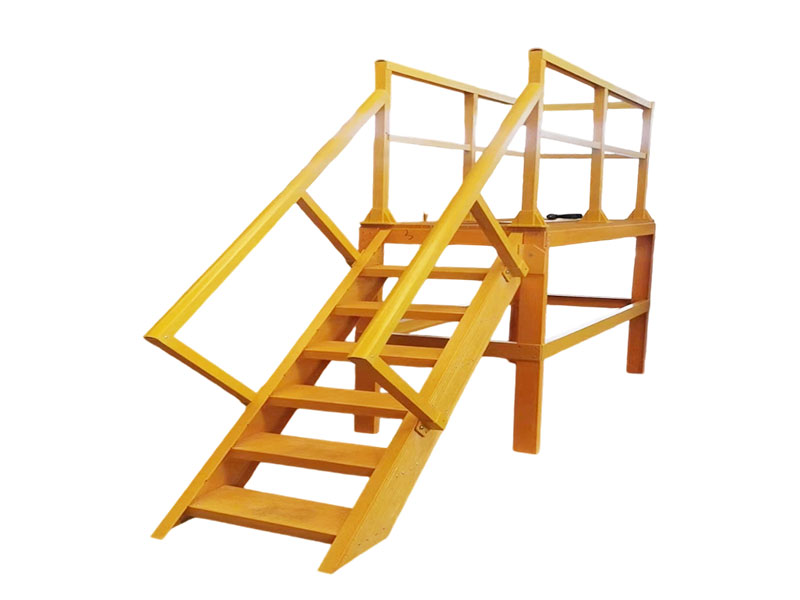
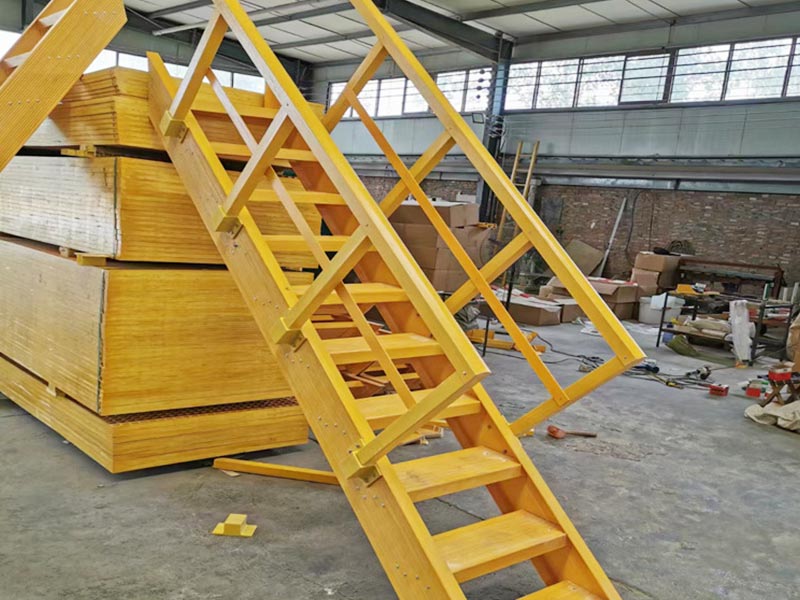
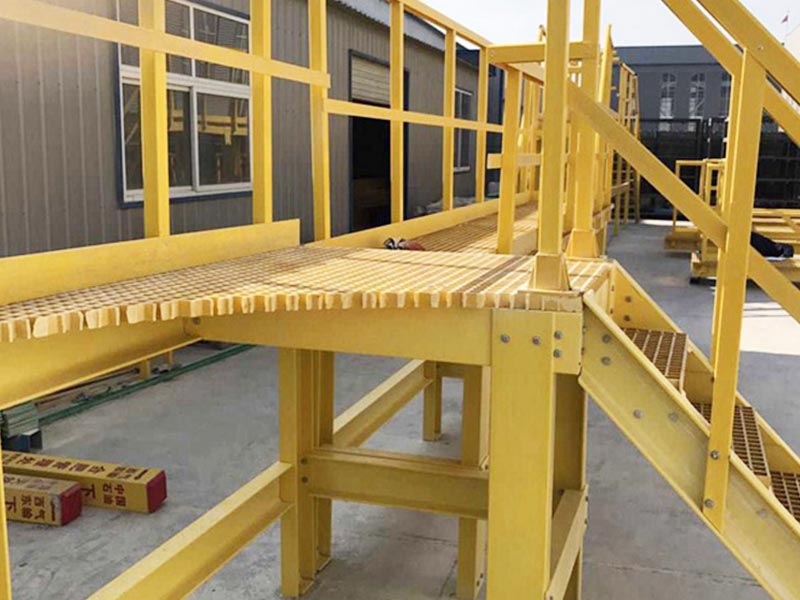
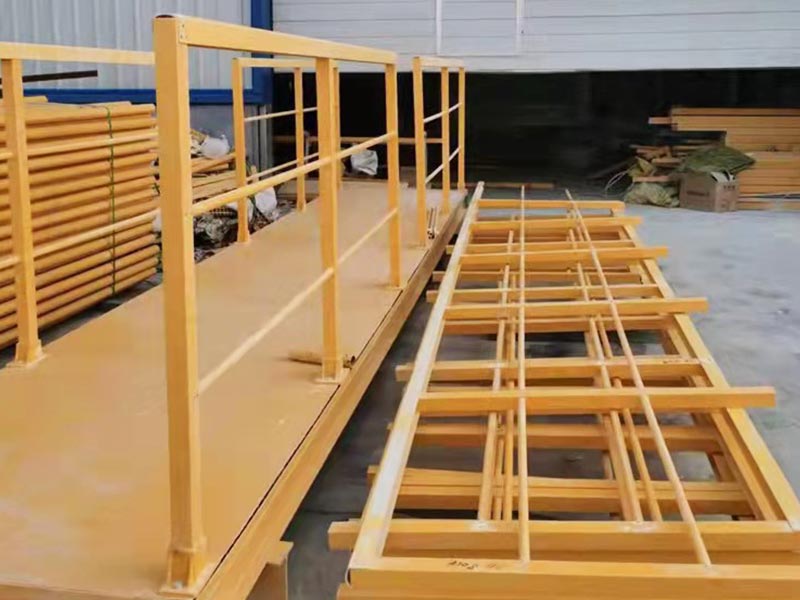
FRP Stair Platforms and Stairways: Many workplaces require the use of FRP platforms—a need that becomes particularly urgent in corrosive environments or operational settings with stringent anti-corrosion requirements. However, despite the current usage landscape, relatively few people are actually aware of the existence of FRP platforms.
Corrosion Resistance
Lightweight & High Strength
Durable and Reliable
Flexible Customization
FRP Stair Platforms and Stairways: Many workplaces require the use of FRP platforms—a need that becomes particularly urgent in corrosive environments or operational settings with stringent anti-corrosion requirements. However, despite the current usage landscape, relatively few people are actually aware of the existence of FRP platforms.
Many enterprises typically purchase FRP grating panels, pipes, and other accessories separately to assemble and construct platforms themselves. In reality, this approach constitutes a rudimentary form of an FRP platform. As is well known, such self-assembly not only increases the workload but also often yields suboptimal results.
Consequently, FRP stair platforms began to emerge as integrated, turnkey solutions. To effectively withstand various corrosive environments while ensuring structural robustness, Kaijie Equipment—in collaboration with European counterparts—developed a specialized anti-corrosion platform. This platform utilizes FRP materials and is constructed using an epoxy structural framework, resulting in a pure-epoxy, anti-corrosion platform system.
● Vertical Platform Ladders ● Inclined Platform Ladders
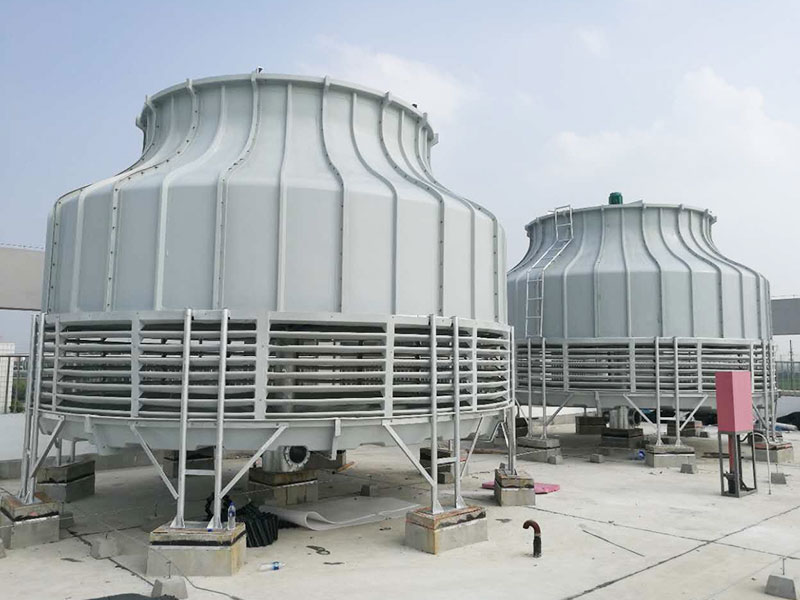
Applications for FRP platform stairways include: chemical plants, sewage treatment plants, cooling tower operating platforms, etc.
FRP platform stairways are manufactured using pultruded FRP profiles.
Pultruded FRP profiles offer distinct advantages:
1. Lightweight: The material density is only one-quarter that of steel, making it easy to handle and install on-site.
2. Corrosion-resistant: It does not rust, requires no maintenance, and offers a long service life.
3. Customizable: Various designs and configurations can be engineered to meet specific customer requirements.
1. Lightweight and High Strength: FRP profiles formed via the pultrusion process possess an exceptionally high glass fiber content (exceeding 60%), resulting in outstanding unidirectional specific strength and specific stiffness. Since the density of FRP is approximately one-quarter that of steel, the material is lightweight and extremely easy to handle, thereby reducing handling costs.
2. Fatigue Resistance: FRP platform stairways exhibit high fatigue strength, allowing them to undergo repeated bending without sustaining permanent deformation.
3. Aging Resistance: Constructed using high-quality pultruded FRP profiles, these platform stairways boast a service life of over 50 years. Furthermore, anti-UV agents are incorporated into the formulation of all pultruded FRP profiles to ensure optimal resistance against ultraviolet radiation.
4. Corrosion Resistance and Rust-Proof: FRP stair platform stairways demonstrate excellent resistance to corrosion, capable of withstanding varying degrees of exposure to acids, alkalis, organic solvents, salts, and other gaseous or liquid media. They are completely rust-proof. Depending on the specific application environment—including the type of corrosive media and temperature requirements—various resin types are available for selection, such as Orthophthalic, Isophthalic, and Vinyl Ester formulations.
Excellent resistance to chemicals, moisture, and corrosion.
Lightweight with high load-bearing capacity.
Maintains performance over long-term use.
No rusting and minimal maintenance required.
Available in various sizes, structures, and specifications.
Provides better safety in industrial applications.